

- English
- Español
- Português
- Deutsch
- Français
- Italiano
- हिन्दी
- Русский
- 한국어
- 日本語
- العربية
- ภาษาไทย
- Türkçe
- Nederlands
- Tiếng Việt
- Bahasa Indonesia
- עברית
- Afrikaans
- አማርኛ
- Azerbaijani
- беларуская мова
- Български
- বাংলা
- bosanski jezik
- Català
- Binisaya
- Corsu
- Čeština
- Cymraeg
- Dansk
- Ελληνικά
- Esperanto
- Eesti Keel
- Euskara
- فارسی
- Suomi
- Frysk
- Gaeilge
- Gàidhlig
- Galego
- ગુજરાતી
- Harshen Hausa
- ʻŌlelo Hawaiʻi
- Hmoob
- Hrvatski
- Kreyòl Ayisyen
- Magyar
- Հայերեն
- Asụsụ Igbo
- Íslenska
- Basa Jawa
- ქართული
- Қазақ тілі
- ភាសាខ្មែរ
- ಕನ್ನಡ
- Kurdî
- кыргыз тили
- Lëtzebuergesch
- ພາສາລາວ
- Lietuvių
- Latviešu
- Malagasy fiteny
- Te Reo Māori
- македонски
- മലയാളം
- Монгол
- मराठी
- Bahasa Melayu
- Malti
- မြန်မာစာ
- नेपाली
- Norsk
- Chinyanja
- ଓଡ଼ିଆ oṛiā
- ਪੰਜਾਬੀ
- Polski
- پښتو
- Română
- Ikinyarwanda
- سنڌي
- සිංහල
- Slovenčina
- slovenščina
- Gagana Sāmoa
- ChiShona
- Af-Soomaali
- Shqip
- Српски
- Sesotho
- Basa Sunda
- Svenska
- Kiswahili
- தமிழ்
- తెలుగు
- Тоҷикӣ
- Türkmençe
- Filipino
- татарча
- ئۇيغۇر تىلى
- Українська
- اردو
- Oʻzbek tili
- isiXhosa
- ײִדיש
- èdè Yorùbá
- 中文(简体)
- 中文(漢字)
- isiZulu
Blog
How to Choose an Aluminum Battery Box for E-Rickshaws (Spec Sheet Inside)
2026-08-28


In April 2022, three Indian EV makers recalled a combined 6,656 electric two-wheelers after a string of battery fires. Ola Electric took back 1,441 units. Okinawa, 3,215. PureEV, 2,000. Within four months the road transport ministry had rewritten the battery safety standard, and by March 2023 every L-category EV sold in India — that includes e-rickshaws — had to pass thermal propagation testing, carry an IPx7-rated pack, and log four temperature sensors' worth of data.
If you assemble e-rickshaws or battery packs, that regulation landed on your battery box. The box is no longer a sheet-metal bin you weld around the cells. It is a tested safety component, and this guide is about getting it right: which aluminum to specify, how thick the walls should be, what IP67 actually demands, and the numbers you should hold your supplier to.
One more piece of context before we start. India bought 580,000+ electric three-wheelers in 2023, overtaking China as the world's biggest e-3W market (IEA data). Annual volume has since pushed past 700,000. The buyers you compete with are all solving the same box problem, and the ones who solve it cheapest per unit are the ones who spec it correctly the first time.
Start with the battery, not the box
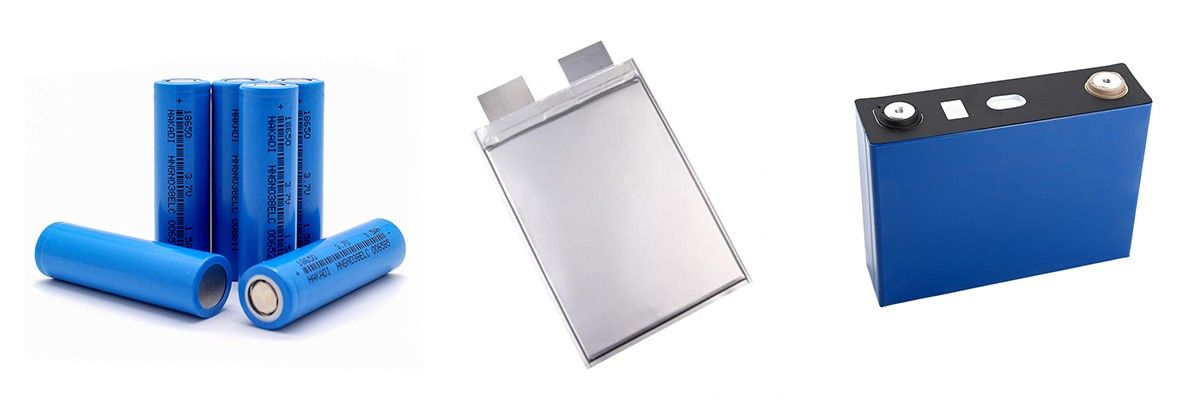
Before any drawing exists, fix what goes inside. In India right now that means one of two setups.
Lead-acid, 48V. Four 12V batteries of 100–150Ah in series. The full set weighs 60–90 kg. The box is basically a vented tray with a lid — lead-acid boxes are typically only IP54, because the batteries need airflow and can vent gas. Cheap, forgiving, and still the majority of the e-rickshaw fleet.
Lithium (LFP), 48V or 51.2V. Two to four times the cycle life of lead-acid (2,000–4,000 cycles versus 300–500), 40–60% lighter for the same energy, and now genuinely competitive on price: cell prices for LFP dropped roughly 30% from 2023 to 2024, which is why every new e-rickshaw platform in India is launching with a lithium option.
Here is the mistake we keep seeing: a box drawn for lead-acid gets reused for a lithium swap, or vice versa. A lithium box is smaller, sealed to IP67, and needs machined sealing faces, pressure vent provisions, and BMS cable routing. A lead-acid box needs none of that but needs to carry 90 kg without sagging. Decide your chemistry first. Everything downstream follows.
Alloy: the three grades that matter, with real numbers
Almost every serious battery box we quote is 6-series aluminum. Within that family, three alloy/temper combinations cover 95% of e-rickshaw work. These are minimum values from the product standards (GB/T 5237 and EN 755-2), not brochure numbers:
| Alloy & temper | Tensile (min) | Yield (min) | Elongation | Where it fits |
|---|---|---|---|---|
| 6063-T5 | 160 MPa | 110 MPa | 8% | Standard box bodies, complex thin-wall sections |
| 6063-T6 | 205 MPa | 170 MPa | 8% | Higher-load bodies, better anodizing finish |
| 6061-T6 | 260 MPa | 245 MPa | 8–12% | Mounting beams, crash/mounting rails, CNC brackets |
How to choose in one sentence: use 6063 for the box body because it extrudes cleanly into thin multi-cavity walls at the lowest cost, and step up to 6061-T6 only where a specific part takes real bolt load or impact.
Two things worth knowing that suppliers rarely volunteer:
Extrudability is money. Rated against 6060 as the 100% baseline, 6063 extrudes at about 95%, 6061 at 75%, and 6082 at 60%. The slower the alloy extrudes, the more you pay per kilo — a 6082-T6 profile runs 30–50% more than the same section in 6063. Unless a customer contract literally specifies 6082, 6063-T6 gets you within striking distance of the strength for noticeably less.
Density is the quiet win. Aluminum is 2.70 g/cm³ against steel's 7.85. In practice, replacing a welded steel e-rickshaw box with an extruded aluminum one takes 30–40% off the housing weight. On a vehicle where the lead-acid pack alone weighs 60–90 kg, every kilogram removed from the box goes straight into payload or range.
Wall thickness: the rule nobody tells you
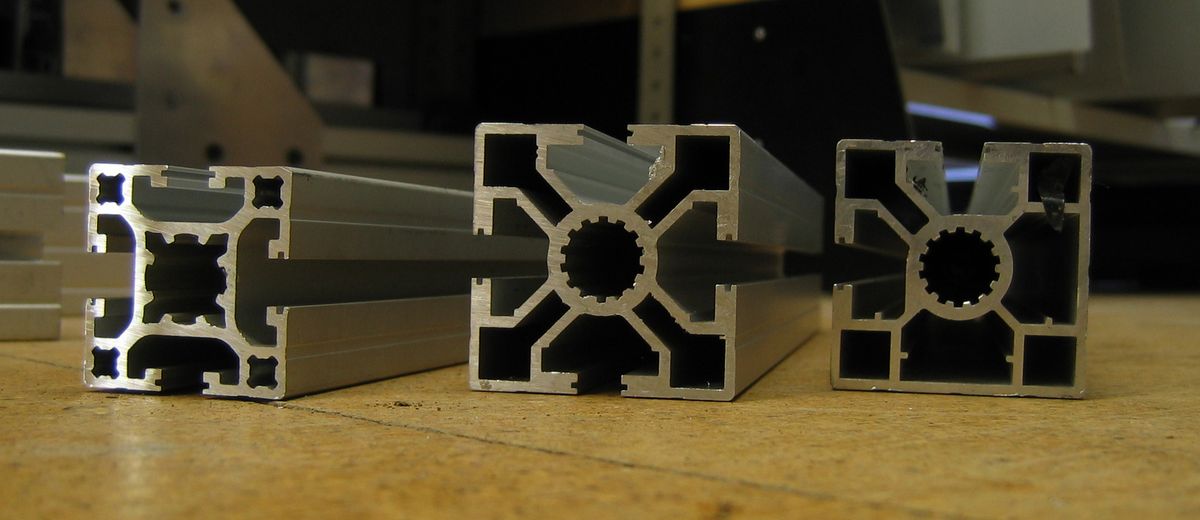
The instinct is "thicker is safer." The reality is that a well-designed extrusion is strong because of its cross-section, not its wall thickness.
The design rule used across the extrusion industry: keep the ratio of wall thickness to the profile's circumscribing circle diameter (CCD — the smallest circle that encloses the whole cross-section) at 1:40 or better for easy-extruding alloys like 6063, and 1:25 for 6061. For a typical e-rickshaw box body of 300–400 mm CCD, that lands you at 1.0–2.0 mm walls. Below that, extrusion pressure climbs and die life falls. Above ~2.5 mm you are mostly buying weight.
The strength comes from what you put inside the profile: internal ribs and multi-cavity sections give substantially higher bending stiffness than a single-chamber profile of the same weight. If your supplier shows you a solid-walled "heavy duty" box with no internal structure, they are selling you aluminum by the kilo.
One more number that matters more than most buyers realize: hollow-profile weld seams. A hollow section is extruded through a porthole die — the metal splits around the mandrel and rewelds under pressure. Done right, that seam holds 85–95% of the base metal strength. Done wrong (dies worn, speed too high, billet too cold), it is the line the box cracks along after a year of potholes. Ask your supplier how they qualify weld seams. If the answer is silence, find another supplier.
Sealing: what IP67 actually requires
Since March 31, 2023, AIS 156 Phase 2 requires lithium packs in L-category vehicles to pass IPx7 — immersion at 1 meter for 30 minutes per IEC 60529. Not splash resistance. Full temporary submersion.
That requirement flows down into three details on the box:
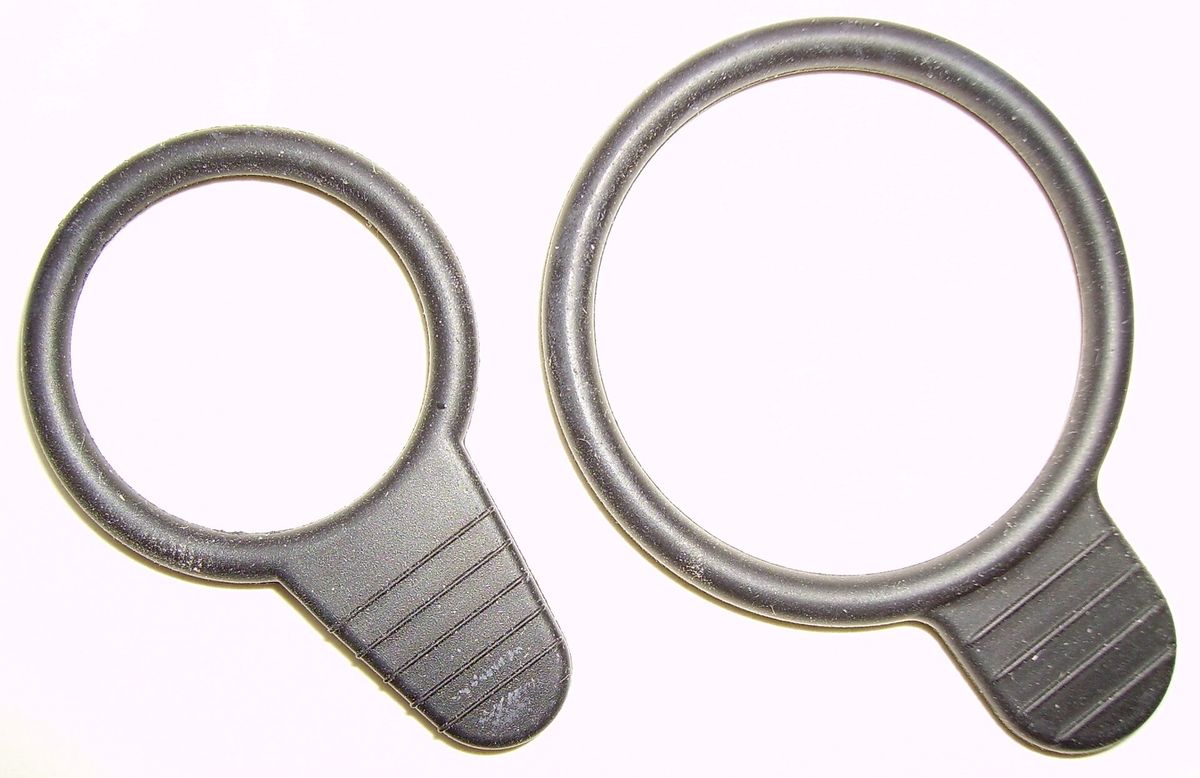
- Machined sealing faces. Standard extrusion cross-section tolerances under EN 755-9 run ±0.3–0.5 mm on dimensions under 100 mm. No gasket survives that on its own. The end-cap faces and gasket grooves must be CNC-machined — we hold ±0.05 mm on machined features — or the seal is theoretical.
- Gasket spec. Ask for the Shore hardness and compression set data, not just " silicone gasket." A gasket that has taken permanent set at 60°C will not seal the second monsoon.
- A pressure relief provision. A sealed IP67 box also traps any gas from a failing cell. AIS 156 expects a pressure vent or relief path in the pack design. The box should have a boss or machined seat for it.
If a supplier quotes you an "IP67 box" but cannot describe the gasket compression ratio or show a machined-face drawing, the rating is a sticker, not a test result.
Heat: the 45°C problem, in numbers
Ambient in Lucknow or Jaipur in May runs 42–45°C. A sealed black box parked in the sun goes higher. Cell aging roughly doubles for every 10°C above their comfort zone — this is the single biggest driver of warranty claims on Indian packs, and the housing is your cheapest defense.
| Material | Thermal conductivity |
|---|---|
| 6-series aluminum | ~200 W/m·K |
| Mild steel | ~16–50 W/m·K |
| Plastic (PP, PC/ABS) | ~0.2 W/m·K |
Aluminum moves heat roughly 5–10× faster than steel and about 1,000× faster than plastic. In a sealed e-rickshaw pack with no liquid cooling, the box walls ARE the cooling system: cell heat conducts into the profile, spreads across the whole surface, and leaves through the largest radiator the vehicle has.
On finish: anodizing to 10–15 µm (AA10–AA15) is the standard spec. It hardens the surface, survives 1,000+ hours of neutral salt spray where paint survives until the first stone chip, and does not peel. Coastal and monsoon markets should not accept painted boxes. One honest caveat — anodizing slightly reduces thermal emissivity compared with a matte black paint, but the conduction advantage dwarfs that effect, and clear or silver anodize keeps most of it.
Vibration and mounting
An e-rickshaw in real service is a vibration test rig with a passenger seat. The box design handles this in three places:
Mounting feet. Bolted mounts should be 6061-T6 machined blocks or thick-wall sections, not tabs bent out of the body profile. AIS 156's mechanical shock and vibration tests load the pack through its mounts — a bent-tab mount is a known failure point.
Battery restraint. Keep the gap between the battery and box side walls tight — Chinese OEM standards for freight e-rickshaws (Jinpeng's enterprise standard is a public example) cap it around 30 mm. Anything looser lets the mass hammer the walls on bad roads, no matter how strong the profile is.
Crush and crush-resistance references. China's GB 38031-2020 requires battery enclosures to resist a 100 kN crush load — a useful benchmark even when you are selling into India, because any box design that passes GB 38031-level crush testing comfortably handles e-rickshaw road loads.
The spec sheet: what to write into your PO
If you take one thing from this article, take this. A vague PO gets you a vague box. Write these lines into your next purchase order:
- Alloy and temper: 6063-T6 body / 6061-T6 mounts (or as your FEA dictates)
- Mechanical properties per GB/T 5237 or EN 755-2, with mill test certificates per lot
- Wall thickness and CCD ratio stated, with internal ribs shown on the drawing
- Cross-section tolerances per EN 755-9; machined sealing faces and mounting features to ±0.05 mm
- Gasket: material, Shore A hardness, and working compression range specified on the drawing
- Anodizing: AA10–AA15, with salt-spray test reports on request
- Weld seam qualification method for hollow profiles (die-change and extrusion-speed controls)
- Sealing: immersion test (1 m / 30 min) on a sample basis, not just a datasheet claim
Suppliers who are set up for this answer in a day, with numbers. Suppliers who aren't answer with adjectives. That difference is worth more than any price gap between quotes.
FAQ
What alloy should an e-rickshaw battery box be? 6063-T6 for the extruded body (205 MPa minimum tensile, excellent anodizing, best extrudability) and 6061-T6 for machined mounting parts (260 MPa minimum tensile). 6082-T6 is stronger but extrudes slowly and costs 30–50% more — rarely worth it for a box that sees road loads, not crash loads.
How thick should the walls of an aluminum battery box be? 1.0–2.0 mm for a typical e-rickshaw box, keeping the wall-to-profile-diameter ratio around 1:40 in 6063. Strength comes from internal ribs and multi-cavity design, not thicker walls.
Is IP67 mandatory for e-rickshaw battery boxes in India? For lithium packs, effectively yes. AIS 156 Phase 2 (in force since March 31, 2023) requires IPx7 — 1 m immersion for 30 minutes — along with thermal propagation testing, pressure venting, and BMS safeguards.
Can one box design fit both lead-acid and lithium packs? Not well. Lead-acid needs a vented IP54 tray sized for 60–90 kg of batteries; lithium needs a sealed IP67 box with machined faces, vent provisions, and BMS routing. Platforms offering both usually run two box designs.
What tolerance should I demand on the sealing faces? ±0.05 mm on CNC-machined end-cap faces and gasket grooves. As-extruded faces (±0.3–0.5 mm per EN 755-9) will not hold an IP67 seal on their own.
Can you supply boxes to our drawings? Yes. We extrude, CNC-machine, and anodize aluminum battery boxes for two- and three-wheeler OEMs, with mill test certificates, tolerance reports, and third-party test reports available. Every stage of our production network is open to customer audits.
How do I get a quote? Send your pack dimensions, cell layout or battery dimensions, target IP rating, and annual quantity. WhatsApp +86 133 0570 9557 or info@aymetals.com — we reply with a review of the design, usually within one working day.
Images: battery cell formats by CRBA (CC BY-SA 4.0); EV battery pack by Votpuske (CC BY-SA 4.0); extruded aluminum sections by Mike1024 (public domain); O-ring seals by Cjp24 (CC BY-SA 3.0) - via Wikimedia Commons.
Request a Quote
Need a custom aluminum battery box for e-rickshaw or 3-wheeler EV? Send us your drawing or specs and we will reply within 24 hours.
WhatsApp UsEmail info@aymetals.com
WhatsApp: +86 133 0570 9557 | Email: info@aymetals.com
Related: Aluminum vs Steel vs Plastic Battery Enclosures: The Numbers That Matter | E-Rickshaw Battery Boxes
Бәйләнешле яңалыклар

Need Aluminum Battery Enclosures?
From extrusion to CNC machining and anodizing, AOYIN delivers end-to-end manufacturing for EV battery housings.
-
-
-
-

WeChat QR Code


