Quzhou Aoyin Metal Materials Co.,Ltd


6063 vs 6061 vs 6082: Which Alloy for Battery Boxes?
Blog
Release time:
2026-08-29
Source


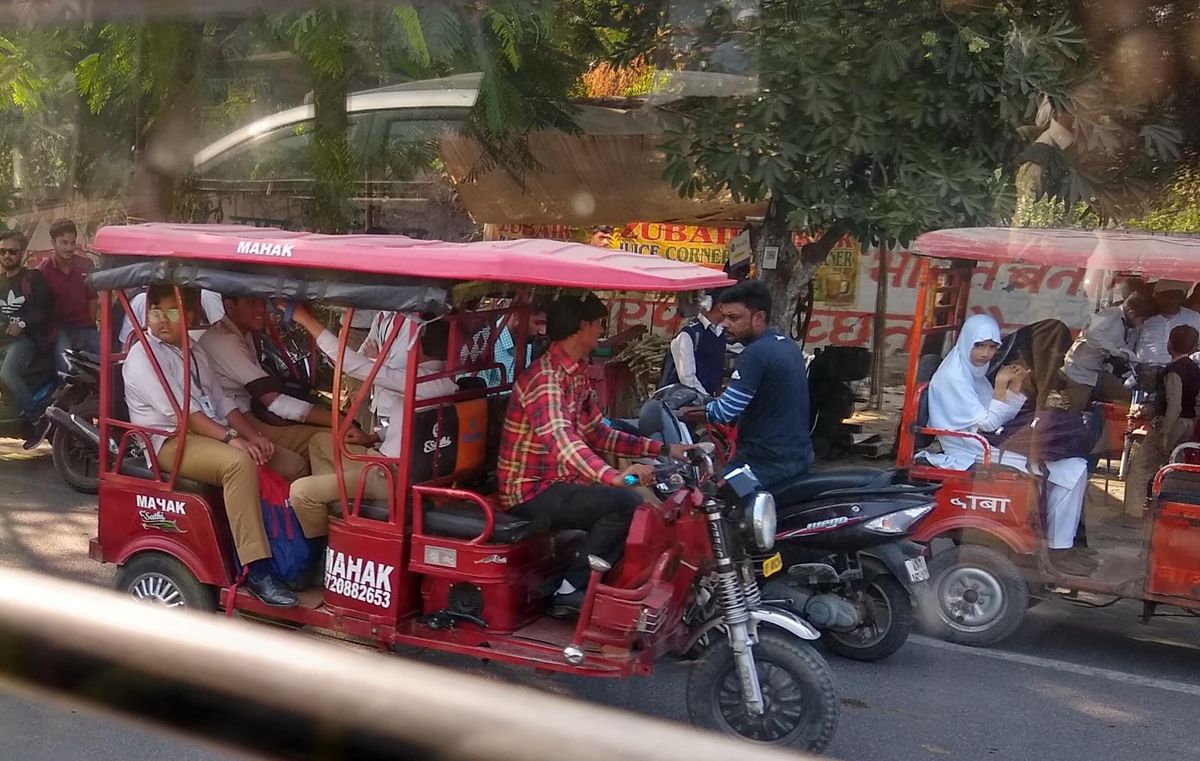
A buyer from a Mumbai e-rickshaw assembler emailed us last month with a drawing and a one-line question: "Supplier A quotes 6063-T6, Supplier B quotes 6061-T6, and Supplier C says 6082-T6 is the only safe choice. Who is right?"
None of them were lying. All three alloys are real, certified, and used in battery enclosures. But only one was the right answer for his specific box — and the difference came down to numbers that two of the suppliers never put in their quotes.
This article compares 6063, 6061, and 6082 the way a production engineer would: using the minimum values from EN 755-2 and GB/T 5237 (not the glossy brochure numbers), what each alloy costs to extrude, how it finishes after anodizing, and the exact battery-box applications where each one wins or wastes money.
Table of Contents
The three grades: minimum strength numbers
Every figure below is the certified minimum from the product standard, not a supplier's typical value — if your mill test certificate shows less, the lot fails.
Every figure below is the certified minimum from the product standard, not a supplier's typical or average value. If your mill test certificate shows numbers below these, the lot fails.
| Alloy & temper | Tensile strength (min) | Yield strength (min) | Elongation (min) | Density |
|---|---|---|---|---|
| 6063-T5 | 160 MPa | 110 MPa | 8% | 2.70 g/cm³ |
| 6063-T6 | 205 MPa | 170 MPa | 8% | 2.70 g/cm³ |
| 6061-T6 | 260 MPa | 245 MPa | 8% | 2.70 g/cm³ |
| 6082-T6 | 310 MPa | 260 MPa | 10% | 2.70 g/cm³ |
Source: EN 755-2:2016, wall thickness ≤ 10 mm. GB/T 5237 gives equivalent minimums for the Chinese market.
The jump from 6063-T5 to 6063-T6 is 45 MPa in tensile strength — a 28% increase — for the same alloy, achieved purely by switching from air-cooled T5 aging to water-quenched T6 aging. The jump from 6063-T6 to 6061-T6 is another 55 MPa. The jump to 6082-T6 is another 50 MPa on top of that.
In a battery box, the difference shows up like this: a 6063-T6 extruded body with internal ribs and a 300 mm CCD (circumscribing circle diameter) handles e-rickshaw road loads comfortably. 6061-T6 is what you specify for mounting feet, crash rails, or any feature that takes bolt torque or impact. 6082-T6 is overkill for a standard two- or three-wheeler box unless the design has an unusually large unsupported span or carries a lead-acid pack weighing 80–90 kg.
One detail that separates professional suppliers from traders: the elongation column. 6082-T6's 10% minimum elongation is higher than the 8% of the other three grades. That extra ductility matters in drop and crash tests — the material bends before it cracks — but for most e-rickshaw boxes, 6063-T6's 8% is sufficient per GB 38031-2020's mechanical requirements.
Extrudability: why it drives your per-kilo price
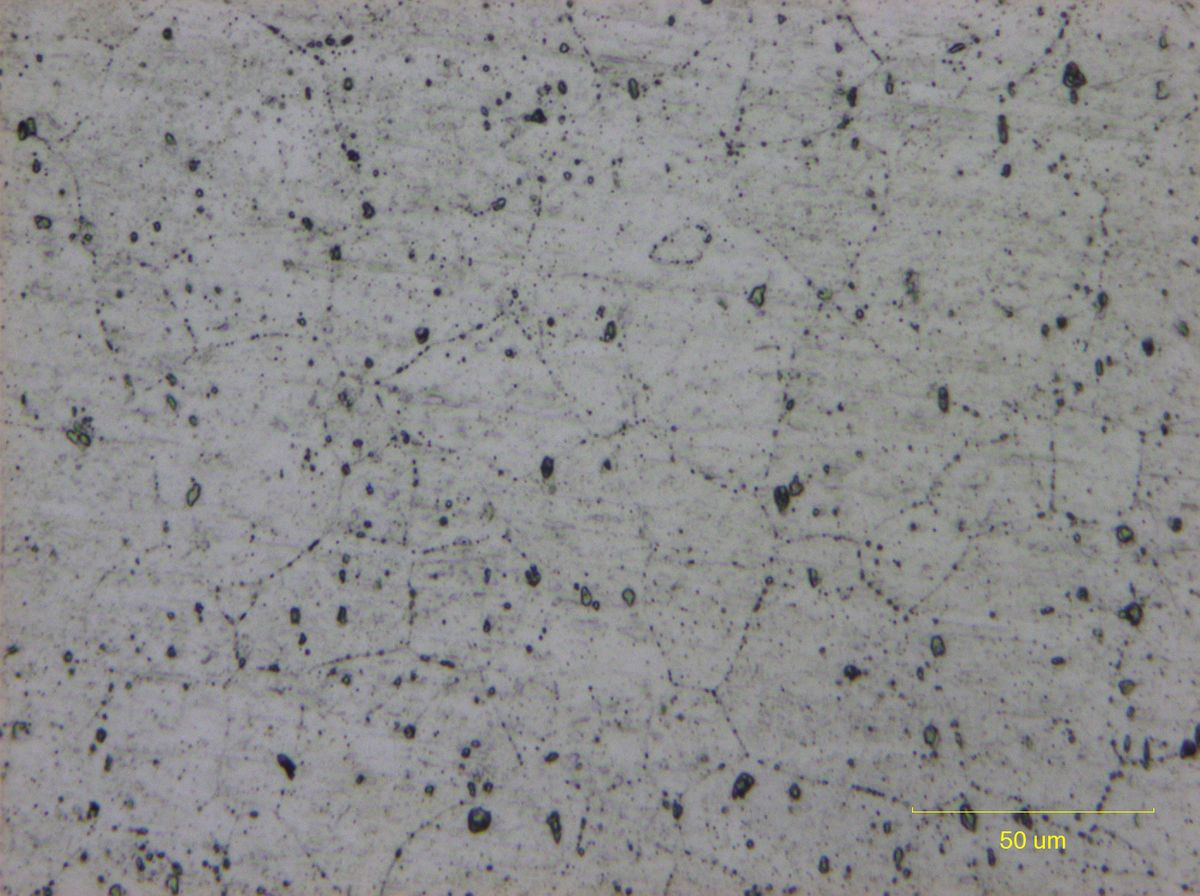
Extrudability is how fast the alloy will flow through a die: 6063 runs at 20-30 m/min, 6061 at 8-15, 6082 at 5-10 — and slower extrusion means a higher per-kilo price.
Extrudability is the alloy's willingness to flow through a die at commercial speed and temperature. Rated against 6060 as the 100% baseline, the approximate industrial rankings are:
| Alloy | Relative extrudability | Typical extrusion speed |
|---|---|---|
| 6063 | ~95% | 20–30 m/min |
| 6061 | ~75% | 8–15 m/min |
| 6082 | ~60% | 5–10 m/min |
Slower extrusion means fewer meters per hour, more die wear, and higher press time per kilogram. The result shows up directly in the quote: a 6082-T6 profile typically costs 30–50% more per kilo than the same cross-section in 6063-T6.
The chemistry explains it. 6063 is an Al-Mg-Si alloy with relatively low magnesium and silicon content — it flows easily at 450–500°C. 6061 adds more magnesium and silicon, plus copper, which raises strength but stiffens the metal during extrusion. 6082 adds even more manganese, which forms intermetallic particles that strengthen the final part but drag on the die during forming.
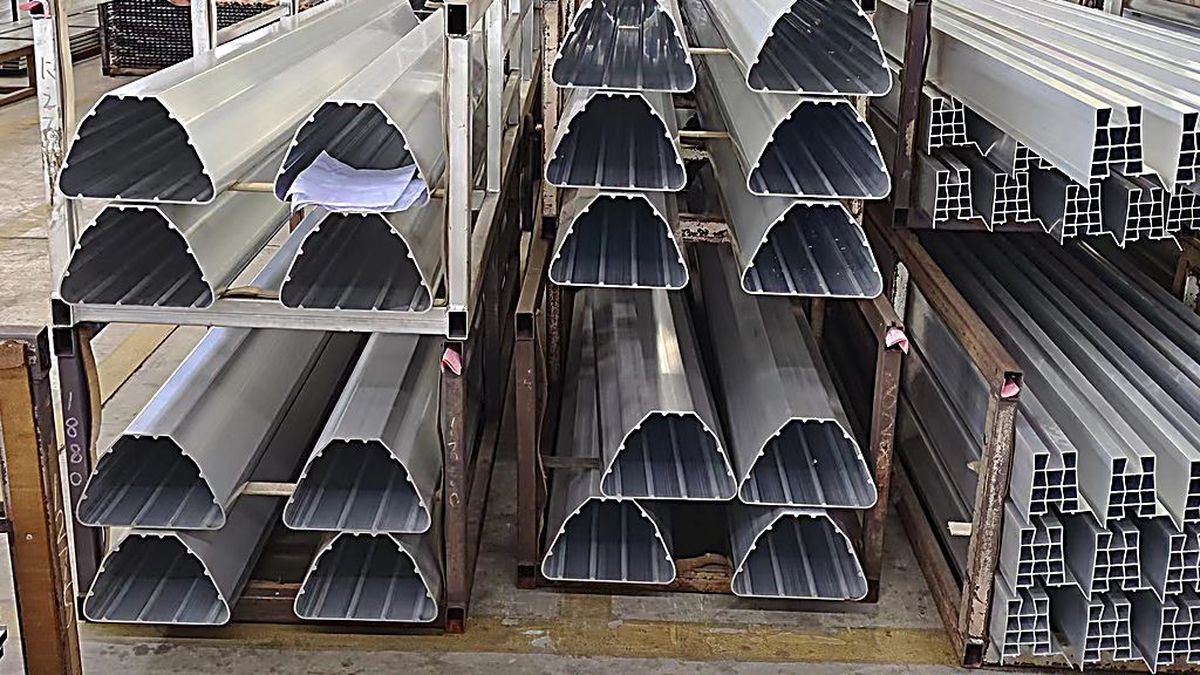
For a battery box body — a long, hollow, multi-cavity extrusion — extrudability is not a minor concern. A die that runs beautifully in 6063 can choke or tear in 6082 unless the die designer opens the bearing angles and slows the speed. That redesign costs money and time.
Heat treatment: T5 vs T6
The "-T5" and "-T6" suffixes describe how the profile was cooled and aged after extrusion, and they are not interchangeable.
The "-T5" and "-T6" suffixes describe how the profile was cooled and aged after extrusion, and they are not interchangeable.
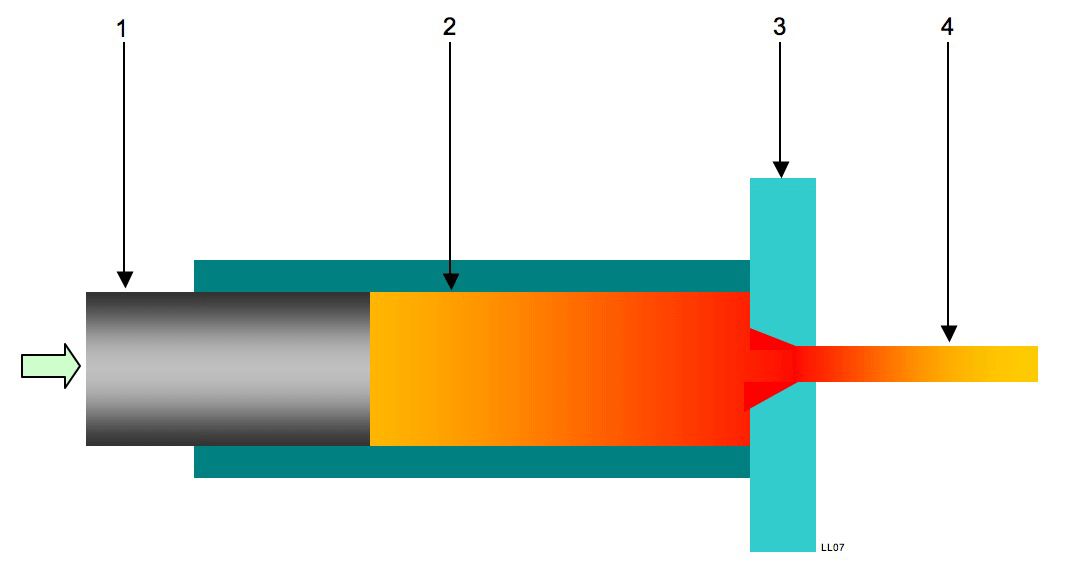
T5 (air quench + artificial aging): The extruded profile exits the press and is cooled in ambient air or forced air, then aged at 160–180°C for roughly 6–10 hours. 6063-T5 is the workhorse of the architectural and general-industrial extrusion world — adequate strength, excellent surface finish, and lower energy cost than T6. For battery box bodies that do not see extreme bolt loads or crash scenarios, 6063-T5 is often specified to save cost.
T6 (water quench + artificial aging): The profile is water-quenched immediately after extrusion to lock the alloying elements in solution, then aged at a similar temperature window. The rapid quench prevents the formation of coarse precipitates that would weaken the part, giving T6 its higher strength. 6063-T6, 6061-T6, and 6082-T6 are all T6-tempered.
The practical difference in a battery box: a 6063-T5 body saves 5–10% on material cost versus 6063-T6, but the T6 version gives you 28% more strength and better anodizing response. For lithium packs in India — where AIS 156 Phase 2 requires IPx7 sealing and thermal propagation resistance — we specify 6063-T6 as the default body material. T5 is acceptable only when the customer explicitly requests cost reduction and the design loads are verified low.
Anodizing finish: not all alloys behave the same
Boxes for monsoon and coastal service need AA10-AA15 anodizing to survive 1,000+ hours of neutral salt spray, and 6063 takes that finish best.
Battery boxes for Indian monsoon and coastal service need anodizing at AA10–AA15 (10–15 µm oxide thickness) to survive 1,000+ hours of neutral salt spray. Not every alloy takes the finish equally well.
6063 is the anodizing favorite. Its relatively pure aluminum matrix produces a uniform, bright oxide layer with consistent color. AA10–AA15 anodizing on 6063-T6 gives the smooth, light-gray finish you see on most commercial battery enclosures.
6061 anodizes acceptably but tends to show slight color mottling because of its higher silicon and copper content. The oxide layer is still protective, but achieving a perfectly uniform cosmetic finish requires tighter bath control. For functional anodizing — corrosion protection, not showroom aesthetics — 6061-T6 is fine.
6082 is the most temperamental of the three. Its higher manganese content can produce a slightly darker, less uniform anodized surface. Again, the corrosion protection is there, but if your brand identity depends on a specific anodized shade across every batch, 6082 demands more process discipline from the anodizing line.
When 6082-T6 genuinely makes sense
For standard e-rickshaw and e-scooter boxes 6082-T6 is usually over-specified — but three situations earn its 30-50% higher price, starting with long unsupported spans.
Here is the honest counterpoint. For standard e-rickshaw and e-scooter battery boxes, 6082-T6 is usually over-specified. But there are three situations where it earns its 30–50% price premium:
Large-format trays with long unsupported spans. A battery tray for a freight e-loader that spans 800 mm between mount points needs the extra 105 MPa of tensile strength that 6082-T6 holds over 6063-T6. Otherwise the tray sags under a 60–80 kg lead-acid load, no matter how clever the ribbing.
Structural beams and mounting rails that take direct crash loads. India's AIS 156 mechanical shock and vibration tests load the pack through its mounts. Where a mounting rail doubles as a structural member, 6082-T6's 310 MPa minimum tensile gives larger safety margins.
Customer contracts that specify 6082. Some European OEMs and tier-1 suppliers write 6082-T6 into their drawings. In those cases, the alloy is fixed by the drawing — a compliance requirement, not an engineering preference.
For everything else — standard e-rickshaw bodies, e-scooter trays, battery covers with internal ribs — 6063-T6 delivers strength within striking distance at noticeably lower extrusion cost and better anodizing consistency.
Decision table: which alloy for which battery box part
Box bodies run 6063-T6, cost-down variants run 6063-T5 where loads are verified light, and mounting feet or crash rails run 6061-T6.
| Part | Recommended alloy | Why |
|---|---|---|
| Box body (standard e-rickshaw / e-scooter) | 6063-T6 | Best extrudability, excellent anodizing, sufficient strength for road loads |
| Box body (cost-down variant, verified low loads) | 6063-T5 | 5–10% material cost saving, adequate for light lithium packs |
| Mounting feet / crash rails | 6061-T6 | Higher bolt-load capacity, better impact resistance |
| Large-span freight tray (>600 mm between mounts) | 6082-T6 | Extra tensile strength prevents sag under heavy loads |
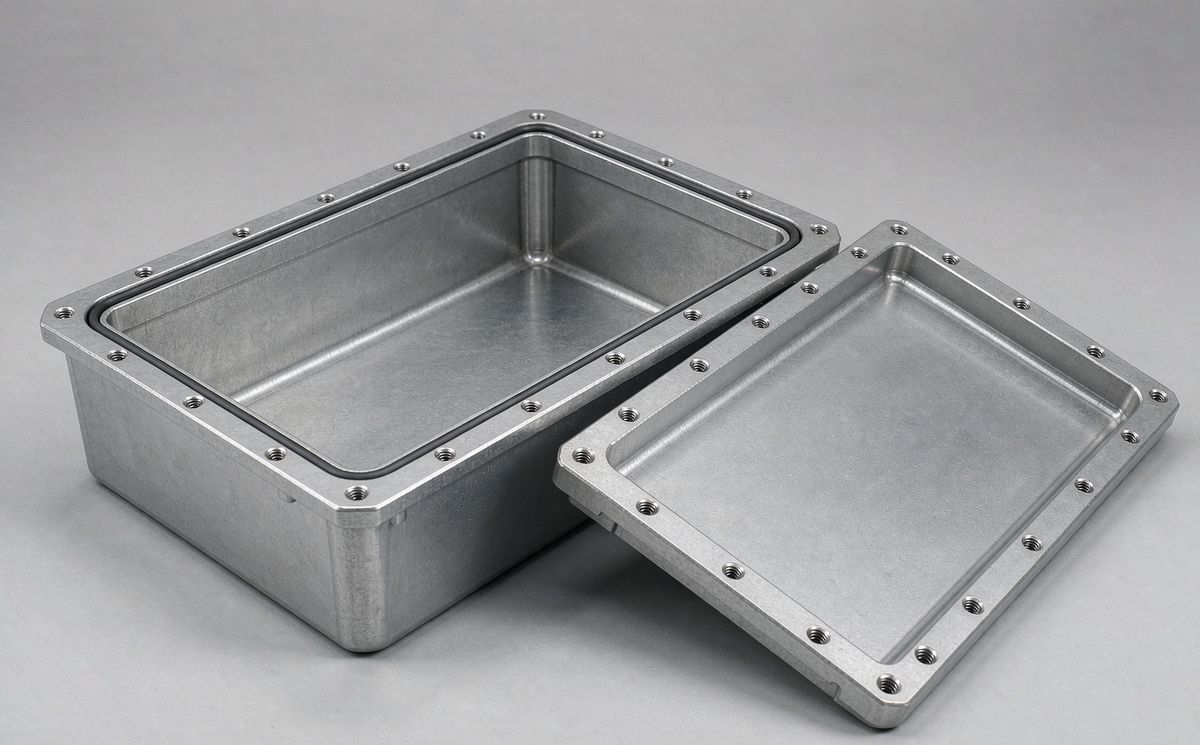
| CNC-machined sealing faces / brackets | 6061-T6 | Machining chip quality and dimensional stability |
| Internal ribs and spacers | 6063-T6 | Easy extrusion into complex hollow sections |
If you take one thing from this table, take this: 6063-T6 is the default for extruded battery box bodies. Step up to 6061-T6 only where a specific part takes real mechanical load. Step up to 6082-T6 only when the design geometry or customer contract demands it.
FAQ
What is the strongest aluminum alloy for battery boxes?6082-T6, with a minimum tensile strength of 310 MPa and yield of 260 MPa per EN 755-2. But stronger is not always better — 6082 extrudes 40% slower than 6063 and costs 30–50% more per kilo. For most e-rickshaw and e-scooter boxes, 6063-T6 at 205 MPa minimum tensile is the right balance.
What is the difference between 6063-T5 and 6063-T6?T6 is water-quenched and aged, giving 28% higher tensile strength (205 MPa vs 160 MPa minimum) and better anodizing response. T5 is air-cooled and aged, saving 5–10% on material cost but with lower strength. We specify 6063-T6 as the default for battery box bodies.
Can I use 6063-T6 for mounting brackets?For light brackets and internal spacers, yes. For mounting feet that take bolt torque or crash loads, 6061-T6 (260 MPa minimum tensile) is the safer choice. The 55 MPa difference in yield strength matters when a bracket sees impact.
Does the alloy choice affect anodizing color?Yes. 6063 gives the most uniform, brightest anodized finish. 6061 can show slight mottling. 6082 tends toward a darker, less uniform surface. For functional corrosion protection, all three work. For precise cosmetic matching, 6063 is the safest.
How much more does 6082-T6 cost than 6063-T6?Typically 30–50% more per kilogram for the same extruded section, driven by slower extrusion speeds (~60% of 6060 baseline vs ~95% for 6063) and higher alloy element content. On a battery box weighing 3–5 kg, that premium is small in absolute terms but unnecessary unless the design loads justify it.
Can you supply boxes to our drawings?Yes. We extrude, CNC-machine, and anodize aluminum battery boxes across our integrated production network, with mill test certificates per EN 755-2 or GB/T 5237 — and every stage is open to your audit.
How do I get a quote?Send your pack dimensions, cell layout or battery dimensions, target IP rating, preferred alloy grade, and annual quantity. WhatsApp +86 133 0570 9557 or info@aymetals.com — we reply with a design review and alloy recommendation, usually within one working day.
Request a Quote
Need a custom aluminum battery box for e-rickshaw or 3-wheeler EV? Send us your drawing or specs and we will reply within 24 hours.
WhatsApp UsEmail info@aymetals.com
WhatsApp: +86 133 0570 9557 | Email: info@aymetals.com
Related: How to Choose an Aluminum Battery Box for Your E-Rickshaw | Aluminum vs Steel vs Plastic Battery Enclosures
Related: How to Choose an Aluminum Battery Box for Your E-Rickshaw · Aluminum vs Steel vs Plastic Battery Enclosures · E-Rickshaw Battery Boxes
RELATED NEWS
Need Aluminum Battery Enclosures?
From extrusion to CNC machining and anodizing, AOYIN delivers end-to-end manufacturing for EV battery housings.
Mobile Phone
Email:
Add:No 339-1 shangye village Gouxi Township Kecheng district Quzhou City, zhejiang province,China
Add:No 339-1 shangye village Gouxi Township Kecheng district Quzhou City, zhejiang province,China

WhatsApp