Quzhou Aoyin Metal Materials Co.,Ltd


Lead-Acid to Lithium: What Changes in Your E-Rickshaw Battery Box
Blog
Lead-Acid to Lithium: What Changes in Your E-Rickshaw Battery Box
Release time:
2026-09-03
Source


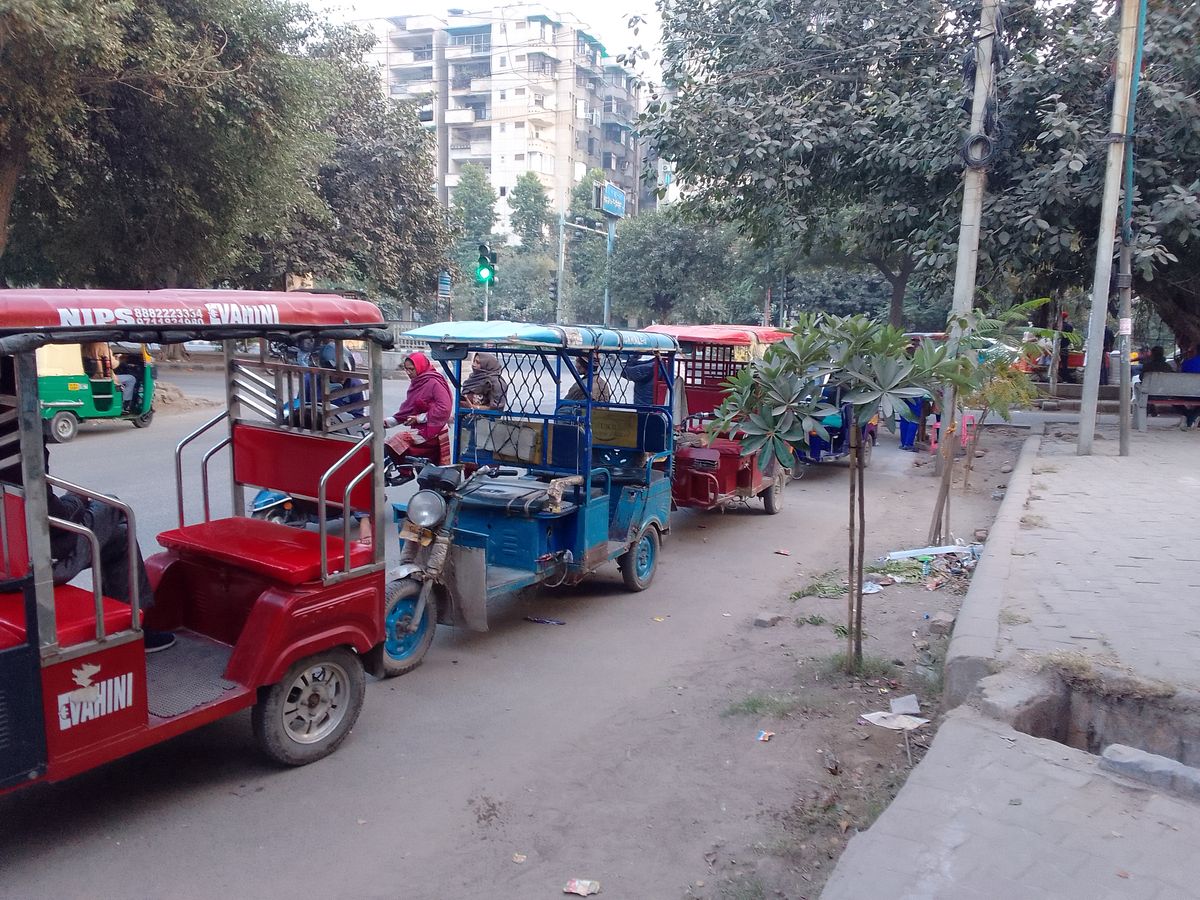
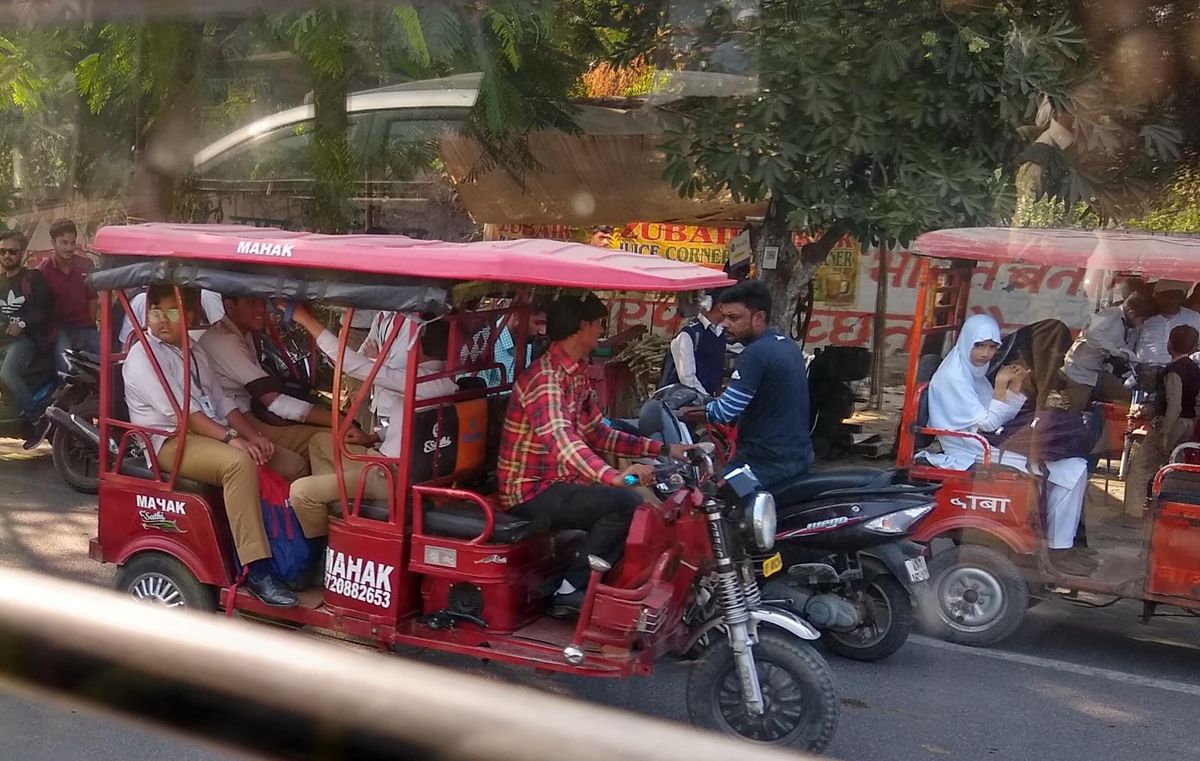
A typical passenger e-rickshaw runs four 12 V lead-acid batteries at 48 V, weighing ~120 kg. The LFP pack that replaces them — same voltage class, same usable energy — weighs about 45 kg. That 75 kg difference is the most misunderstood number in the "lithium conversion" RFQs we receive.
Most buyers treat the swap as a battery decision. It is not: it is a box decision, because the enclosure that was correct for lead-acid is mechanically and legally wrong for lithium.
- The numbers behind the switch
- Why the old lead-acid tray is the wrong box
- Sealing: vented is now your enemy
- Mounting: 75 kg lighter is not free
- Thermal: lithium does not forgive 45 °C
- Compliance: AIS 156 does not grandfather your tray
- The honest counterpoint: when lead-acid still wins
- What to put in your RFQ
- FAQ
The numbers behind the switch
India sold 801,431 electric three-wheelers in CY2025 — 67% of the global market (IEA Global EV Outlook 2026) — yet the low-cost e-rickshaw base still runs largely on lead-acid. The trigger for conversion is price: LFP cell prices have fallen roughly 30%, pushing the total-cost crossover.
| Parameter | Lead-acid (deep-cycle) | LFP (LiFePO₄) |
|---|---|---|
| Pack energy density | ~30-40 Wh/kg | ~100-130 Wh/kg |
| 48 V / 100 Ah example weight | ~120 kg | ~40-45 kg |
| Cycle life (80% DoD) | ~300-500 | 2,000+ (up to 3,000-5,000 by duty) |
| Calendar life in Indian heat | 1.5-2.5 years | 5-8 years |
| Charge temperature window | Tolerant | 0-45 °C typical |
| Hydrogen venting during charge | Yes | No |
2.5-3× upfront for 5-10× the cycles closes the economics on daily vehicles — hence a box built for a 5-8 year asset, not a 2-year consumable.
Why the old lead-acid tray is the wrong box
The tray is not reusable, for four reasons:
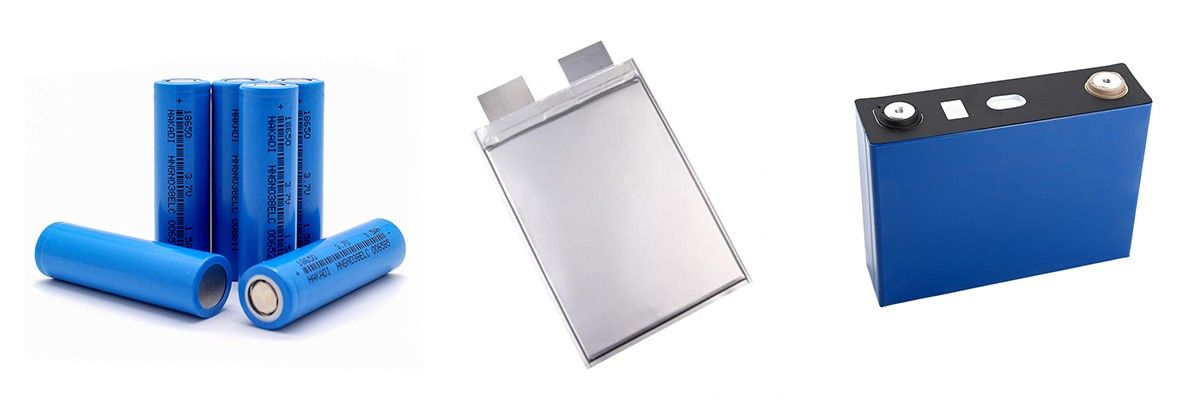
1. Geometry. Four tall 12 V blocks with series links become one low, wide LFP module with an internal BMS. Old compartments and hold-down brackets fit neither the footprint nor the connectors.
2. Sealing philosophy (next section).
3. Load path. A 45 kg pack on brackets sized for 120 kg must be positively located or it shifts. E-rickshaw-class standards cap battery-to-wall clearance (Jinpeng Group enterprise standard: ≤ 30 mm).
4. BMS and harness. Lithium adds a management board, contactor and signal harness; a lead-acid tray has no mount points or sealed glands for them.
Strapping the pack into the old layout fails vibration testing and makes service access worse.
Sealing: vented is now your enemy
This is the change most people get backwards. A lead-acid box is vented on purpose — the batteries release hydrogen during charge, and an airtight box would trap gas. Typical rating: IP54, breathing through gasketed vents.
LFP does not vent in normal operation, so the requirement flips to sealed. Under AIS 156 (India's L-category traction-battery rule, aligned to UN ECE R100 Rev.3), lithium must pass IPx7 — 1 m immersion for 30 minutes (IEC 60529 / IS/IEC 60529) — on every new L-category lithium vehicle since 31 March 2023 (AIS 156 Phase 2).
In practice:
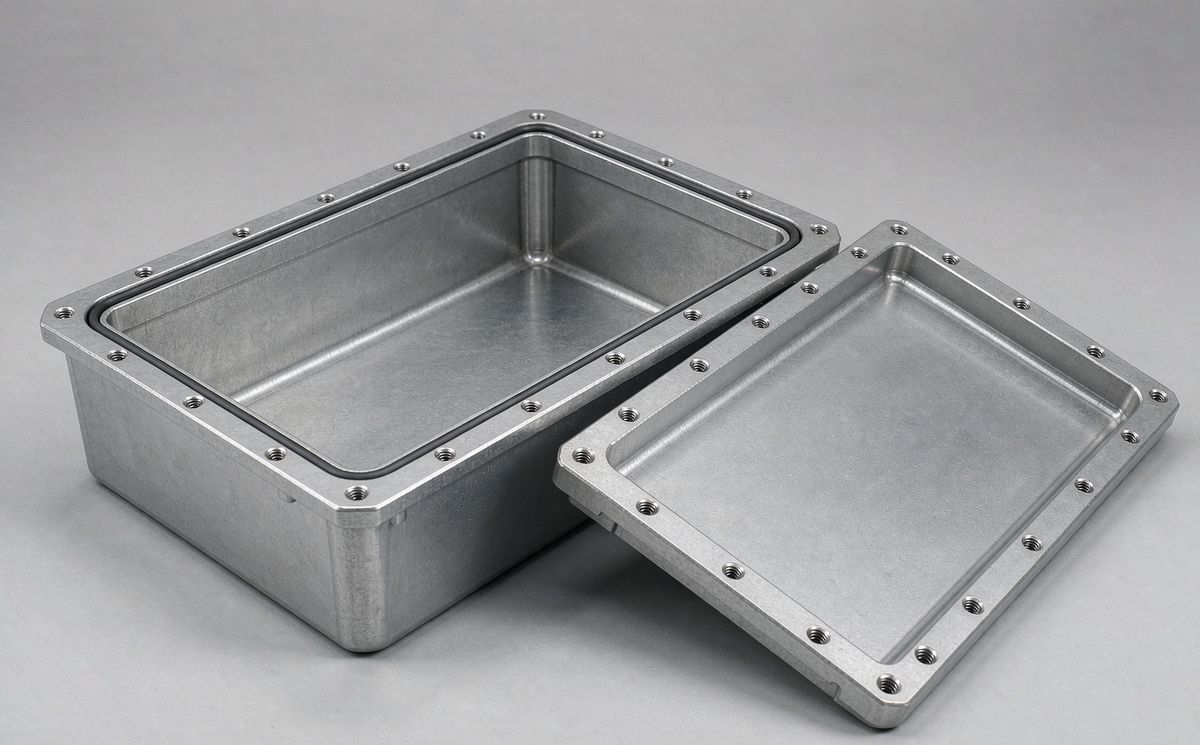
- A continuous sealing face: CNC-machined O-ring groove with a closed-cell gasket (we machine faces to ±0.05 mm; extrusion tolerance EN 755-9 ±0.3-0.5 mm).
- Sealed cable glands, not rubber grommets.
- A pressure-equalization membrane replaces the open vent — the box breathes without letting water in.
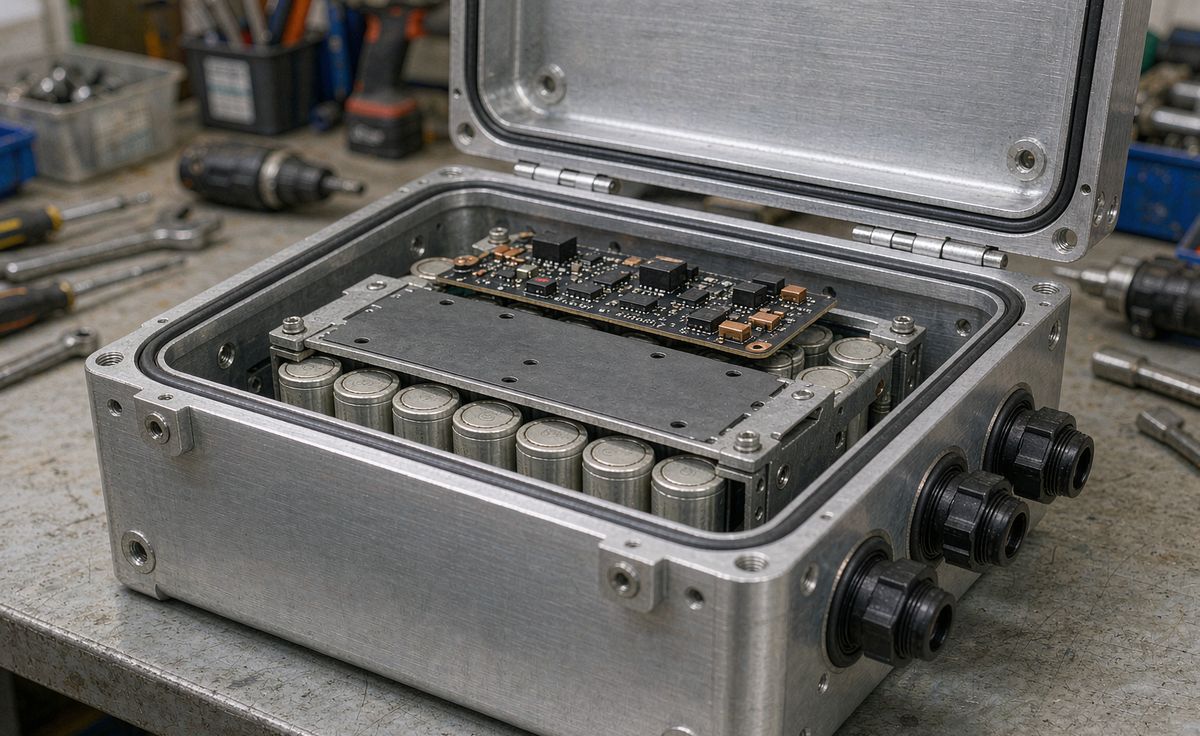
Sealing the old vented tray with workshop silicone gets you neither IP54 nor IPx7 — an unvented box that leaks where it is not sealed.
Mounting: 75 kg lighter is not free
Removing 75 kg helps range and tire wear, but brackets welded for 120 kg now carry 45 kg — and AIS 156 Phase 2 vibration/shock sequences (from ECE R100) are severe.
- Positive location, not friction. Brackets and rubber isolators, not foam wedges.
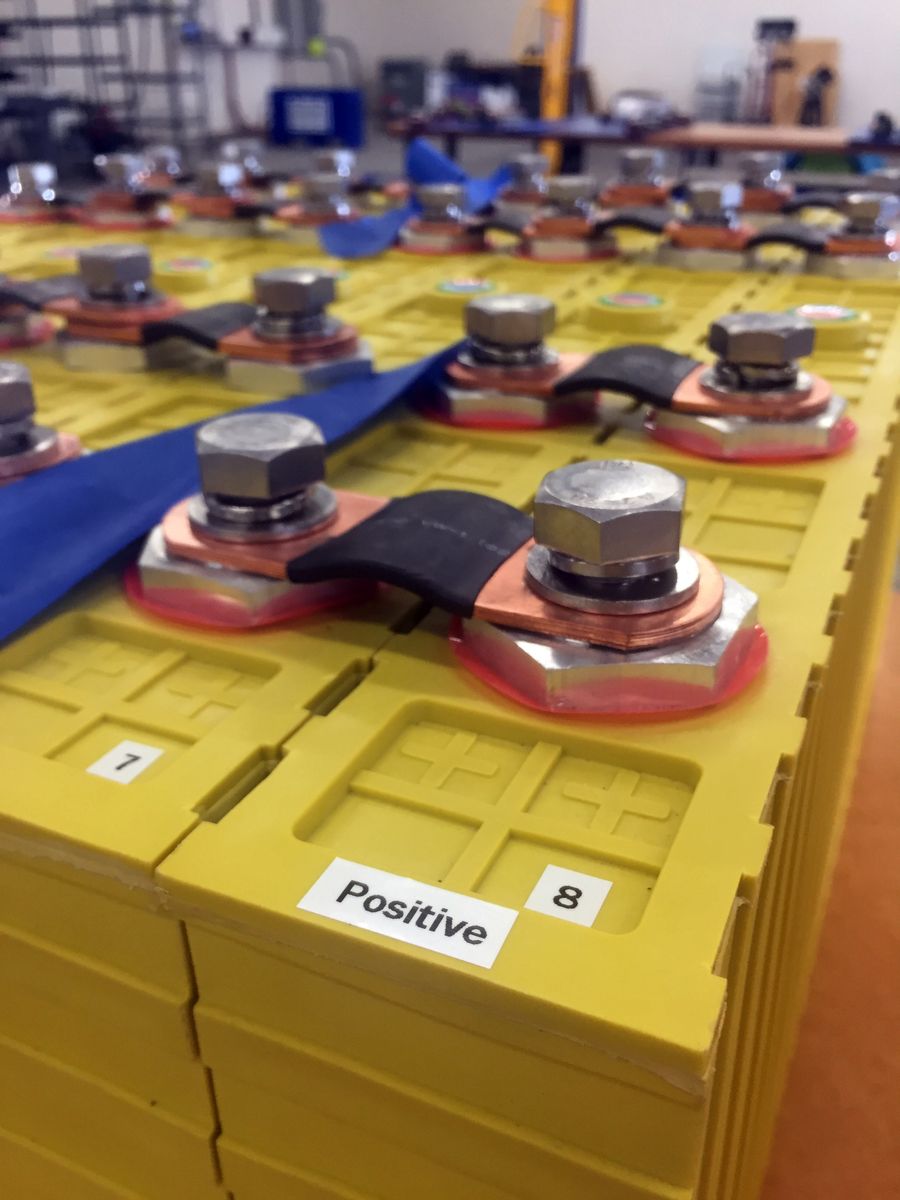
- Strain relief. Inter-module busbars fatigue first — torque bolted interconnects properly and support the main harness.
- Use the saved weight: margin for a stiffer frame or thicker lid without exceeding the old total.
Thermal: lithium does not forgive 45 °C
Indian summer ambient reaches 45-47 °C, and a black box in the sun sits higher. LFP's window is 0-45 °C charge / -20 to 60 °C discharge; sustained heat accelerates fade and, with a defective cell, is a fire-risk factor. Lithium needs what the old box lacked:
1. A heat path out. Aluminum's thermal conductivity (167-237 W/m·K) is why an aluminum box is the practical choice — the enclosure conducts heat out. A plastic box does not.
2. BMS thermal management. Cell temperature must be read and charge derated above the datasheet limit. AIS 156 Phase 2 requires fault detection and communication (over/under-voltage, over-current, over-temperature), not silent failure.
3. System-level testing. Run the AIS 156 thermal sequences with the box in place, not cells on a bench.
Compliance: AIS 156 does not grandfather your tray
AIS 156 covers the lithium traction battery as a system — cells, BMS, enclosure, connectors — certified by ARAI or ICAT in India. Cell-level thresholds: an LFP BMS must act above ~3.65 V/cell and below ~2.5 V/cell; NMC thresholds are ~4.2 V / ~2.8 V.
Three consequences:
- The box is part of the certified system. Changing geometry, sealing or materials after certification means re-testing parts of AIS 156.
- Insulation resistance and creepage are specified too (parallel Chinese rule: GB 24155-2020). Sharp internal edges that chafe the harness fail this on test.
- A retrofit is not invisible: a lead-acid type-approved vehicle that gets lithium should have its traction battery re-verified with the certifying agency — the gap behind the 2022 fire recalls and Phase 2 enforcement.
The honest counterpoint: when lead-acid still wins
We build boxes for lithium — saying this costs us sales — but lead-acid is not dead, and for some buyers it is still correct.
- Upfront cash. At 2.5-3× the price, LFP is out of reach for day-to-day-financed buyers.
- Recycling. India's lead-acid chain is mature; LFP recycling is early. A spent lead-acid vehicle has scrap value; a worn LFP pack mostly does not.
- Duty cycle. Short, shallow cycles with long idle time may never earn back the premium.
Our line: one shift, no financing for the higher first cost — stay lead-acid. Daily duty and per-cycle costing — lithium wins, and the box changes with it.
What to put in your RFQ
Send these or the quote is guesswork:
- Pack L × W × H, weight, chemistry (LFP vs NMC)
- Voltage/capacity (e.g. 51.2 V, 100 Ah); BMS in the pack or the box?
- IP rating — state IPx7 for AIS 156, never "waterproof"
- Mounting: bolt pattern, isolators, clearance (≤ 30 mm battery-to-wall)
- Harness entries: cable count, gland sizes, connector type
- Ambient range (India: -5 to 50 °C box-level, direct sun)
- Certification target (AIS 156; will the box join a certified system?)
- Material/finish: extruded 6063-T6 or 6061-T6, anodized or powder-coated
EN 755-2 minimums for guaranteed values: 6063-T6 ≥ 215 MPa tensile / ≥ 170 MPa yield; 6061-T6 ≥ 260 / ≥ 240 MPa.
FAQ
How much weight do I save from lead-acid to LFP on a 48 V e-rickshaw?
Roughly 60-65%: the lead-acid set is ~120 kg; the LFP equivalent ~40-45 kg including the aluminum box.
Can I reuse my lead-acid tray for lithium?
Not as-is. It is vented (wrong for lithium), sized for tall blocks, and has no BMS/harness provisions. Fit a new sealed box.
Do I need IP67 or IPx7?
AIS 156 requires IPx7 (1 m, 30 min); most sealed boxes also pass IP6X dust. Write "IPx7", not "waterproof", in the RFQ.
Do you make retrofit boxes, and can you quote from our pack dimensions?
Yes — send pack dimensions, chemistry, voltage and target IP rating; we reply with a design review and a number, usually within one working day. Every stage is audit-welcome.
How long does the aluminum box last?
The extruded 6063-T6/6061-T6 box outlives the first pack — 10+ years. The consumable is the seal, not the metal.
Planning a Lead-Acid to Lithium Conversion?
Send us your pack dimensions, chemistry and target IP rating. We will review the box design and quote from real drawings — integrated production network, every stage open to audit.
WhatsApp UsEmail info@aymetals.com
WhatsApp: +86 133 0570 9557 | Email: info@aymetals.com
Related: How to Choose an Aluminum Battery Box for E-Rickshaws | Aluminum vs Steel vs Plastic Battery Enclosures | 6063 vs 6061 vs 6082 Alloy Guide | IP54 vs IP65 vs IP67 Explained
Photos: Battery Rickshaws by Rrthakur22 and LiFePO4 cells by Yo-Co-Man, both licensed under CC BY-SA 4.0, via Wikimedia Commons. Third photo: AOYIN production illustration.
RELATED NEWS


Need Aluminum Battery Enclosures?
From extrusion to CNC machining and anodizing, AOYIN delivers end-to-end manufacturing for EV battery housings.
Email:
Add:No 339-1 shangye village Gouxi Township Kecheng district Quzhou City, zhejiang province,China
Add:No 339-1 shangye village Gouxi Township Kecheng district Quzhou City, zhejiang province,China
-
-
-
-

WhatsApp