Quzhou Aoyin Metal Materials Co.,Ltd


India E-Rickshaw Market in Numbers: Battery Box Demand
Specify & sourcing
Release time:
2026-08-31
Source


India sold 801,431 electric three-wheelers in 2025 — a 15% year-on-year jump that gave India a 67% share of every electric three-wheeler sold worldwide (IEA Global EV Outlook 2026). Electric models now take 60% of India's total three-wheeler market.
If you source battery boxes or assemble packs for India, that number is your addressable demand. This article gives you the data a procurement team actually uses: where the volume sits, what policy is driving it, what still gets subsidized, and where the numbers get messy.
Table of Contents
The headline number: 801,431
India sold roughly 1.36 million three-wheelers in 2025 and electric captured 60% of them, up from 53% in 2023 — a rapid displacement, not a gradual shift.
India's total three-wheeler market (petrol, CNG, diesel, electric) sold roughly 1.36 million units in 2025. Electric captured 60% of it — up from 53% in 2023. This is not a gradual shift; it is a rapid displacement of the CNG models that ran Indian streets for two decades.
| Year | India e-3W sales | YoY growth | Share of total 3W market |
|---|---|---|---|
| 2023 | 583,718 | +65% | 53% |
| 2024 | 695,278 | +19% | 57% |
| 2025 | 801,431 | +15% | 60% |
Source: IEA Global EV Outlook 2025/2026; Vahan registration data via Autocar Pro
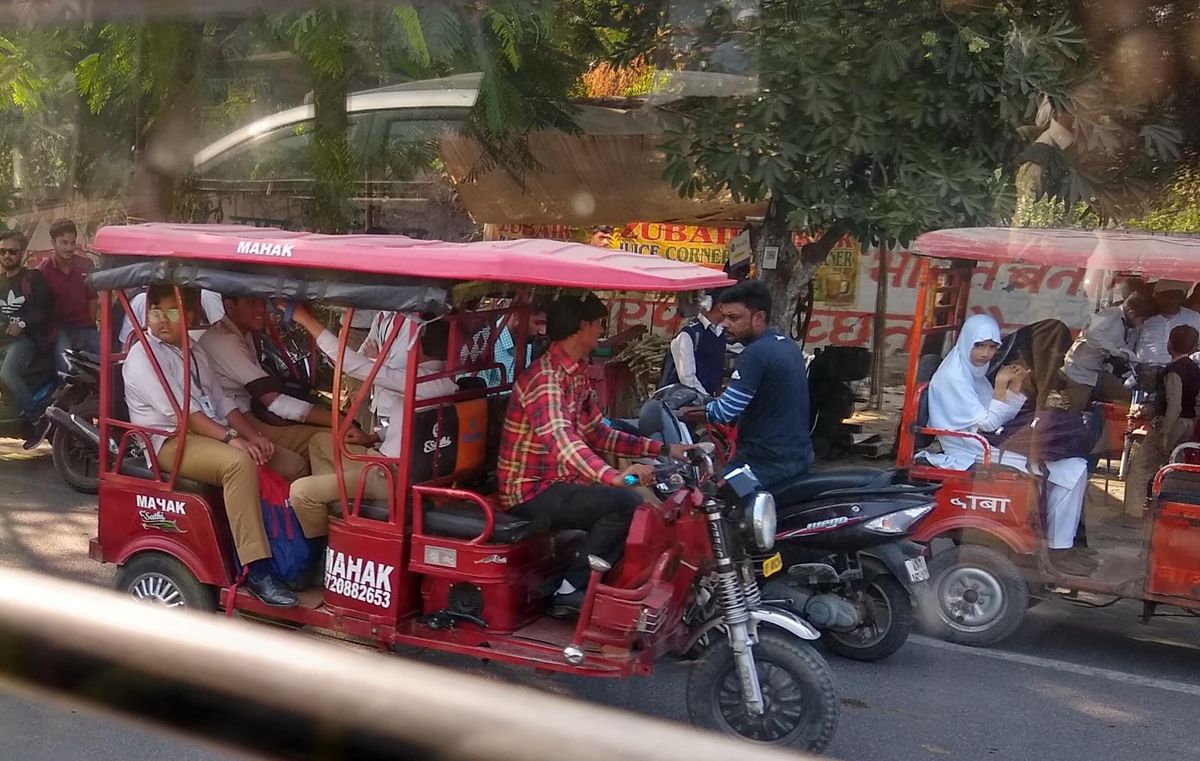
Volume is concentrated in Uttar Pradesh, Maharashtra, and Karnataka — also the states where last-mile delivery fleets expand fastest. A freight e-3W carries a larger pack (often 48V 100Ah LFP or bigger) than a passenger e-rickshaw, so its battery box is larger, heavier, and harder on sealing and crash requirements.
India vs China: who is growing, who is not
India's e-3W sales rose 15% in 2025 while China's fell 3% to about 290,000 units, stuck below 15% electric penetration for three years running.
India's e-3W sales rose 15% in 2025; China's fell 3% to about 290,000 units, stuck below 15% electric penetration for three consecutive years.
| Market | 2023 | 2024 | 2025 | Electric share |
|---|---|---|---|---|
| India | 583,718 | 695,278 | 801,431 | 60% |
| China | ~320,000 | 300,000 | 290,000 | <15% |
| Turkey | ~20,000 | ~35,000 | ~48,000 | >80% of local 3W |
Source: IEA Global EV Outlook 2025/2026
India, China, and Turkey together account for over 95% of global e-3W sales. For a battery box supplier, that concentration simplifies things: design for Indian road conditions and AIS 156 compliance, and you cover most of the world's demand.
Policy: FAME-II, PM E-DRIVE, what is still funded
FAME-II ran from April 2019 to March 2024 on Rs 11,500 crore — about $1.38 billion — and had subsidized 1,615,080 vehicles by March 2025.
FAME-II ran from April 2019 to March 2024 with a budget of Rs 11,500 crore (about $1.38 billion). As of March 11, 2025, it had subsidized 1,615,080 vehicles (official PIB data):
| Segment | Vehicles subsidized under FAME-II |
|---|---|
| e-2 wheelers | 1,428,009 |
| e-3 wheelers | 164,523 |
| e-4 wheelers | 22,548 |
| Total | 1,615,080 |
Source: Press Information Bureau, Government of India, March 18, 2025
PM E-DRIVE replaced it on September 29, 2024 with Rs 10,900 crore (about $1.3 billion). E-3W support has been extended to 2028: Rs 715 crore for L5 three-wheelers, Rs 192 crore for e-rickshaws and e-carts, targeting 320,000 units.
Practical note for 2026 quoting: L5 cargo subsidy funds were exhausted by December 2025. If your customers build freight e-3Ws, expect order softness until the next policy cycle. E-rickshaw and e-cart allocations remain available.
The supply chain: CKD kits, AIS 156, and why the box matters
India is the biggest market but not yet the biggest manufacturer: China exported 650,000 electric three-wheelers in 2024 and India absorbed 220,000 of them, 32% of the total.
India is the biggest market but not yet the biggest manufacturer. China exported 650,000 electric three-wheelers in 2024 worth $5.5 billion (Chinese customs); India absorbed 220,000 units — 32% of the total.
That import dependency shapes procurement. Assemblers importing CKD kits still source battery packs separately, and every lithium pack in an L-category vehicle must pass AIS 156 Phase 2 (in force since March 31, 2023): IPx7 immersion testing, thermal propagation resistance, and BMS safeguards.
This is where the box earns its price. A box that arrives with mill test certificates per GB/T 5237 or EN 755-2, CNC-machined sealing faces to ±0.05 mm, and anodizing to AA10–AA15 saves the assembler from re-testing enclosure integrity before pack certification.
What the headline numbers hide
Three caveats sit behind the 801,431 figure, and the first is subsidy dependence — the 60% electric share came with incentives of up to Rs 50,000 per passenger e-rickshaw.
801,431 units is real, but three caveats matter before you scale production around it:
Subsidy dependence. The 60% electric share was achieved with incentives of up to Rs 50,000 per passenger e-rickshaw. When L5 funds ran out in December 2025, cargo sales softened immediately. PM E-DRIVE pays less per vehicle than FAME-II did — the electric share could stall before the government's 70% target.
Charging infrastructure gap. FAME-II sanctioned 7,432 public charging stations, but deployment lags sanctioning. For fleets running 12-hour shifts, charging downtime is lost revenue. Until the grid catches up, a share of the market stays CNG — especially in Tier-3 cities.
Lead-acid persistence. LFP cell prices fell roughly 30% from 2023 to 2024, yet a large share of India's e-rickshaw fleet still runs on lead-acid — which needs vented IP54 trays, not sealed IP67 boxes. If you supply only sealed IP67 aluminum enclosures, you are targeting the lithium segment: growing fast, but still a subset of the fleet.
What this means for battery box demand
At 801,431 new e-3Ws a year and a 4-5 year pack life, India's installed base of e-3W battery packs has likely crossed 2.5 million units.
At 801,431 new e-3Ws in 2025 and a 4–5 year pack life, India's installed base of e-3W battery packs likely crossed 2.5 million units. Add replacement demand (crash damage, corrosion, upgrades) at 15–20% of new-vehicle volume, and the enclosure market keeps compounding even if vehicle growth slows.
The market splits into two spec clusters:
| Application | Typical voltage | Typical capacity | Box requirements |
|---|---|---|---|
| Passenger e-rickshaw (L3) | 48V | 100–140Ah lead-acid or 50–80Ah LFP | Vented or sealed; IP54–IP67; 60–90kg lead-acid load |
| Freight e-cart (L5) | 48V–60V | 100–200Ah LFP | Sealed IP67; machined faces; BMS cable routing; higher crash load |
The question for suppliers is no longer "is there volume?" It is whether your box matches the regulatory and thermal environment: AIS 156 compliance, 45°C ambient capability, and the structural loads of Indian roads.
We extrude, CNC-machine, and anodize aluminum battery boxes for two- and three-wheeler OEMs across our integrated production network, with mill test certificates and third-party test reports available. Every stage — from billet to finished box — is open to your audit. Send your pack dimensions, cell layout, and target IP rating: WhatsApp +86 133 0570 9557 or info@aymetals.com, and we reply with a design review and numbers, usually within one working day.
FAQ
How many electric three-wheelers did India sell in 2025?801,431 units (IEA Global EV Outlook 2026) — up 15% from 695,278 in 2024, and 60% of India's total three-wheeler market.
What share of global e-3W sales does India hold?67% in 2025. India, China, and Turkey together account for over 95% of global sales.
Is FAME-II still active?No — it ended March 2024. PM E-DRIVE (Rs 10,900 crore) replaced it, with e-3W subsidies extended to 2028.
How many e-3Ws were subsidized under FAME-II?164,523 electric three-wheelers out of 1,615,080 total subsidized EVs (PIB, March 2025).
Does India import e-rickshaws or build them locally?Both. China exported 650,000 e-3Ws globally in 2024; India took 220,000 units (32%), mostly as CKD kits assembled locally.
What battery box specs does the Indian market require?For lithium packs, AIS 156 Phase 2 mandates IPx7 sealing (1m immersion, 30 minutes), thermal propagation resistance, and BMS safeguards. We recommend 6063-T6 extruded bodies, sealing faces machined to ±0.05 mm, anodizing to AA10–AA15 for monsoon and coastal durability.
Can you supply certified battery boxes for Indian OEMs?Yes — with GB/T 5237 or EN 755-2 mill test certificates, tolerance reports, and sealing validation. Send your drawing to WhatsApp +86 133 0570 9557 or info@aymetals.com.
Request a Quote
Need a custom aluminum battery box for e-rickshaw or 3-wheeler EV? Send us your drawing or specs and we will reply within 24 hours.
WhatsApp UsEmail info@aymetals.com
WhatsApp: +86 133 0570 9557 | Email: info@aymetals.com
Related: How to Choose an Aluminum Battery Box for E-Rickshaws | Aluminum vs Steel vs Plastic Battery Enclosures
Related: How to Choose an Aluminum Battery Box for E-Rickshaws · Aluminum vs Steel vs Plastic Battery Enclosures · 6063 vs 6061 vs 6082: Which Aluminum Alloy for Battery Boxes
RELATED NEWS
Need Aluminum Battery Enclosures?
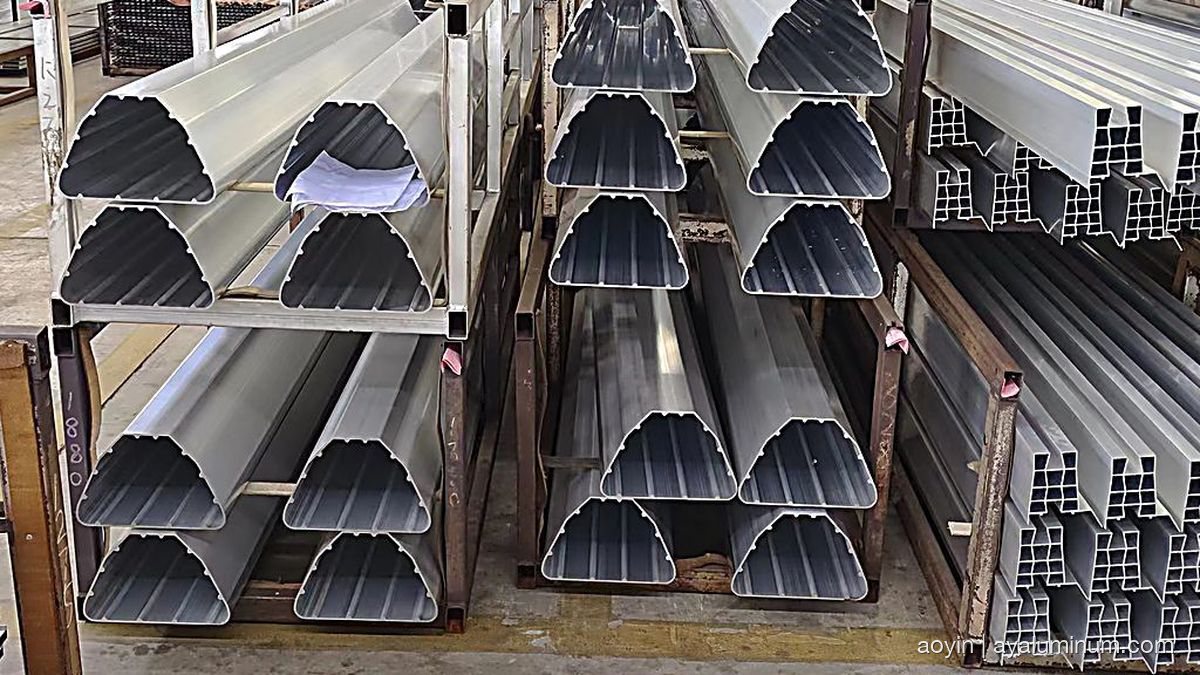
From extrusion to CNC machining and anodizing, AOYIN delivers end-to-end manufacturing for EV battery housings.
Mobile Phone
Email:
Add:No 339-1 shangye village Gouxi Township Kecheng district Quzhou City, zhejiang province,China
Add:No 339-1 shangye village Gouxi Township Kecheng district Quzhou City, zhejiang province,China

WhatsApp