Quzhou Aoyin Metal Materials Co.,Ltd


How Aluminum Extrusion Works for Battery Boxes
Blog
How Aluminum Extrusion Works for Battery Boxes
Release time:
2026-09-10
Source


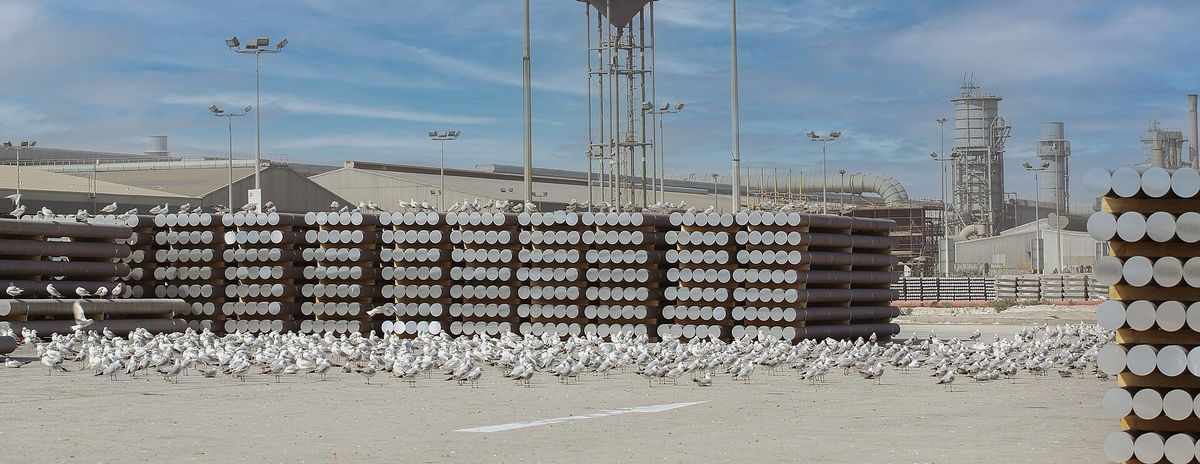
The wall of your battery box is 1.5 mm thick. It started life as a solid aluminum cylinder roughly 200 mm across, and it became that wall in a few seconds of controlled violence: a hydraulic ram pushing metal heated to about 480°C through a steel die opening, at pressures that would crush concrete. If you buy extruded battery boxes, the five steps in this article are where your quality is won or lost — and where the price differences between quotes actually come from.
In one definition: aluminum extrusion is the process of pushing a heated aluminum billet — 450–500°C for 6xxx alloys — through a hardened steel die to form a continuous profile of constant cross-section, the way toothpaste leaves the tube. Everything else on this page is what happens between the furnace and the finished battery box, with the numbers a buyer can verify.
Table of Contents
- The five steps at a glance
- Step 1: Casting and homogenizing the billet
- Step 2: Heat, press, speed
- Step 3: The die and the weld seams nobody sees
- Step 4: Quench and aging — where T5 and T6 actually differ
- Step 5: Cut, machine, anodize
- What to check before you order
- The honest counterpoint: when extrusion is the wrong process
- FAQ
The five steps at a glance
| Step | Key parameters | What it decides |
|---|---|---|
| 1. Cast & homogenize | Melt 720–750°C; homogenize ~560°C; billets Ø80–300 mm | Alloy chemistry, porosity, extrudability |
| 2. Heat & press | Billet 450–500°C (±5°C); die preheated ~480°C; 0.5–5 m/min | Surface quality, dimensional accuracy, die life |
| 3. Die & seam | H13 tool steel die; porthole seams at 80–90% of base strength | Hollow-profile integrity |
| 4. Quench & age | T5: air cool + 160–180°C × 4–8 h; hardness HV 3–5 → 11–15 | Final strength (T5 vs T6) |
| 5. Cut & finish | Stretch-straighten to ±0.5 mm; CNC faces to ±0.05 mm; anodize 5–20 µm | Sealing, corrosion life |
Step 1: Casting and homogenizing the billet
Everything starts in the melting furnace, where the charge is held at 720–750°C. Two things happen there that show up in your box a year later. First, chemistry: 6063 is a lean Al-Mg-Si alloy — roughly 0.45–0.9% magnesium and 0.2–0.6% silicon — and the Mg₂Si those two form is what later gives the profile its strength. Second, cleanliness: rotating degassing with nitrogen or argon pulls dissolved hydrogen and slag out of the melt. Skip it, and the billet carries porosity into the press, where it becomes blisters and pressure leaks.
The cast billet then goes through homogenization — held around 560°C for hours. This evens out the microstructure and makes the alloy extrude faster and cleaner. A well-homogenized billet is one of the quiet reasons one supplier quotes lower than another without cutting corners.
Step 2: Heat, press, speed
The billet is heated to 450–500°C, controlled to about ±5°C — hot enough to flow like very stiff plastic, well below melting. The die is preheated separately to around 480°C so the metal does not lose heat the moment it touches tooling.
Then the press does its work. Industrial presses run from roughly 1,000 up to 12,000 tonnes; a typical battery-box profile of 300–400 mm section width sits comfortably in presses up to 5,000 tonnes, which is what we run. Exit speed is 0.5–5 m/min for heavy structural sections.
Temperature and speed are coupled: push speed up and friction pushes the die-exit temperature toward 520–540°C, where the surface starts to tear. A supplier who "runs it hot and fast" to quote cheaper is spending your fatigue life to save his minutes. The tell-tale is surface quality — die lines, pick-up, and dull patches where the surface began to tear.
Step 3: The die and the weld seams nobody sees
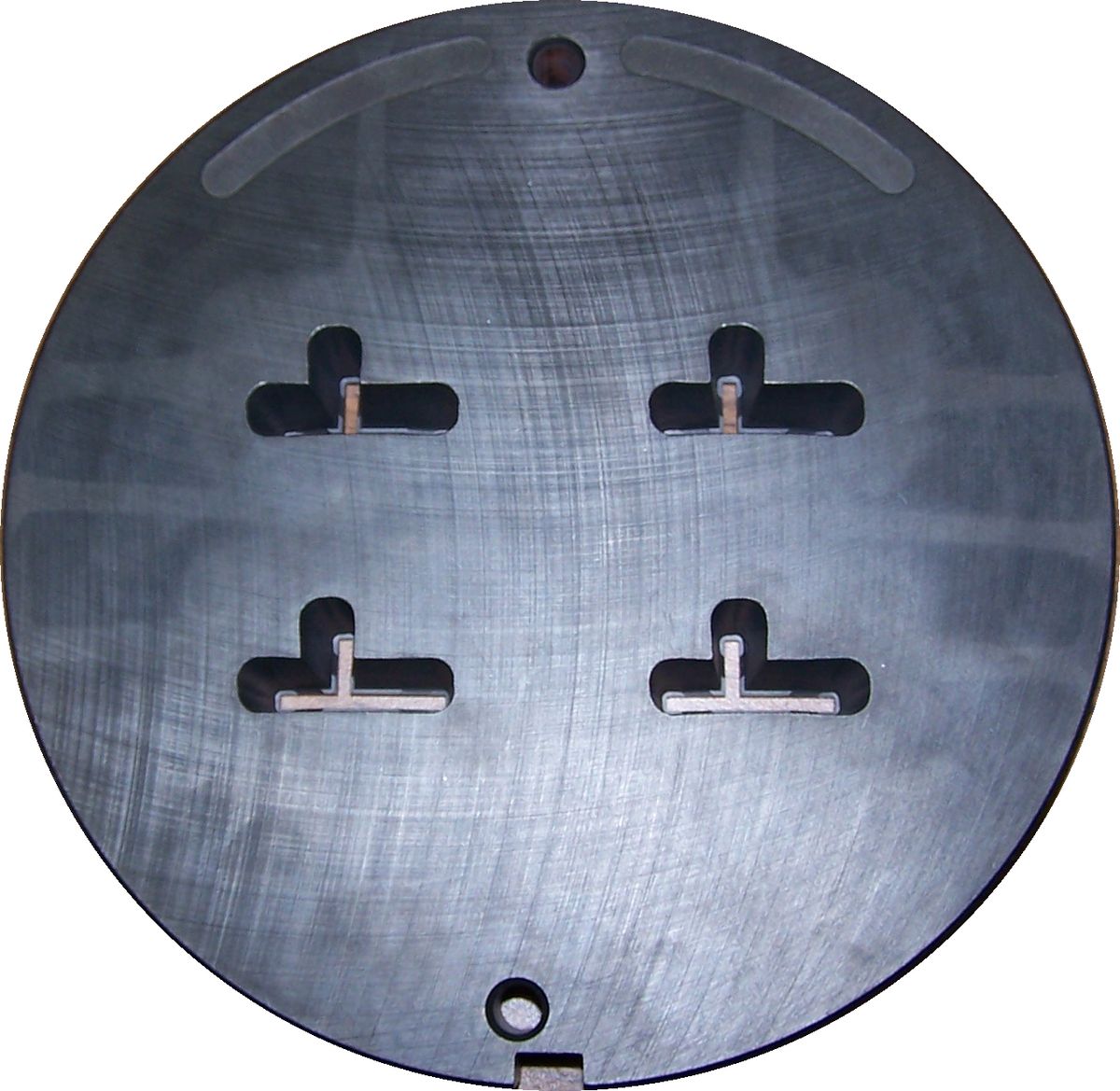
Battery boxes are hollow, and hollow profiles are made with a porthole die: the aluminum stream splits around a mandrel and welds itself back together under pressure and heat before it exits. That seam-welding happens entirely inside the die — you cannot see it, which is exactly why it deserves your attention.
Done right, a porthole seam holds 80–90% of base-metal strength (industry band per Chinese EV-tray process literature). Done wrong — worn die, cold billet, speed too high — the seam is where the box cracks along after its first monsoon of potholes. Dies themselves are H13 tool steel, CNC-machined and wire-cut, then nitrided; a nitrided die holds dimensional accuracy for tens of thousands of metres of extrusion before re-nitriding. Ask any supplier of hollow battery profiles one question: how do you qualify your seam welds? There should be an answer with numbers, not a shrug.
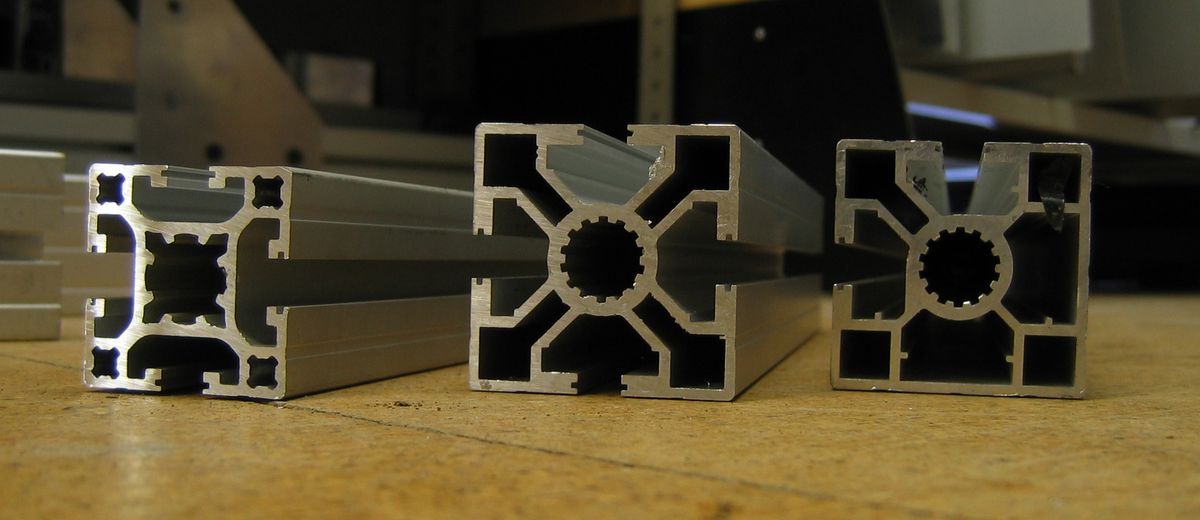
The same die design is also where stiffness comes free. A multi-cavity section raises bending section modulus by 40%+ over a single-chamber profile of similar weight — which is why good box profiles look like I-beams hiding inside the wall.
Step 4: Quench and aging — where T5 and T6 actually differ
The profile exits the die at roughly 500–520°C and is quenched — cooled fast enough to freeze the alloying elements in solid solution. This is the fork in the road:
- T5: cooled in forced air off the press run-out, then artificially aged at 160–180°C for 4–8 hours. Low residual stress, profiles stay straight, lowest cost.
- T6: water or mist quenched (cooling rates of 20–30°C/s), then aged around 180–195°C for 5–8 hours. Higher strength, more internal stress, needs stretching to keep straight.
During aging, fine Mg₂Si precipitates form and hardness climbs from HV 3–5 in the as-extruded state to HV 11–15. That is the entire commercial difference between T5 and T6 battery box profiles: same alloy, same die — a quench and an oven decide whether your 6063 ships at a guaranteed 160/120 MPa or 215/170 MPa (tensile/yield minimums, EN 755-2):
| Alloy & temper (EN 755-2) | Tensile (min) | Yield (min) | Typical role in a box |
|---|---|---|---|
| 6063-T5 | ≥ 160 MPa | ≥ 120 MPa | Vented lead-acid trays, covers |
| 6063-T6 | ≥ 215 MPa | ≥ 170 MPa | Sealed box bodies, multi-cavity walls |
| 6061-T6 | ≥ 260 MPa | ≥ 240 MPa | Mounting beams, brackets |
| 6082-T6 | ≥ 310 MPa | ≥ 260 MPa | High-load rails (costs 30–50% more to extrude) |
Step 5: Cut, machine, anodize
After quenching, a stretch straightener pulls the profile (a few tenths of a percent elongation) to kill bow and twist — straightness lands within ±0.5 mm over length. Profiles are cut to length, head and tail defects are scrapped — around 10% of every billet goes back to the furnace.
Then the two steps that turn a profile into a battery box:
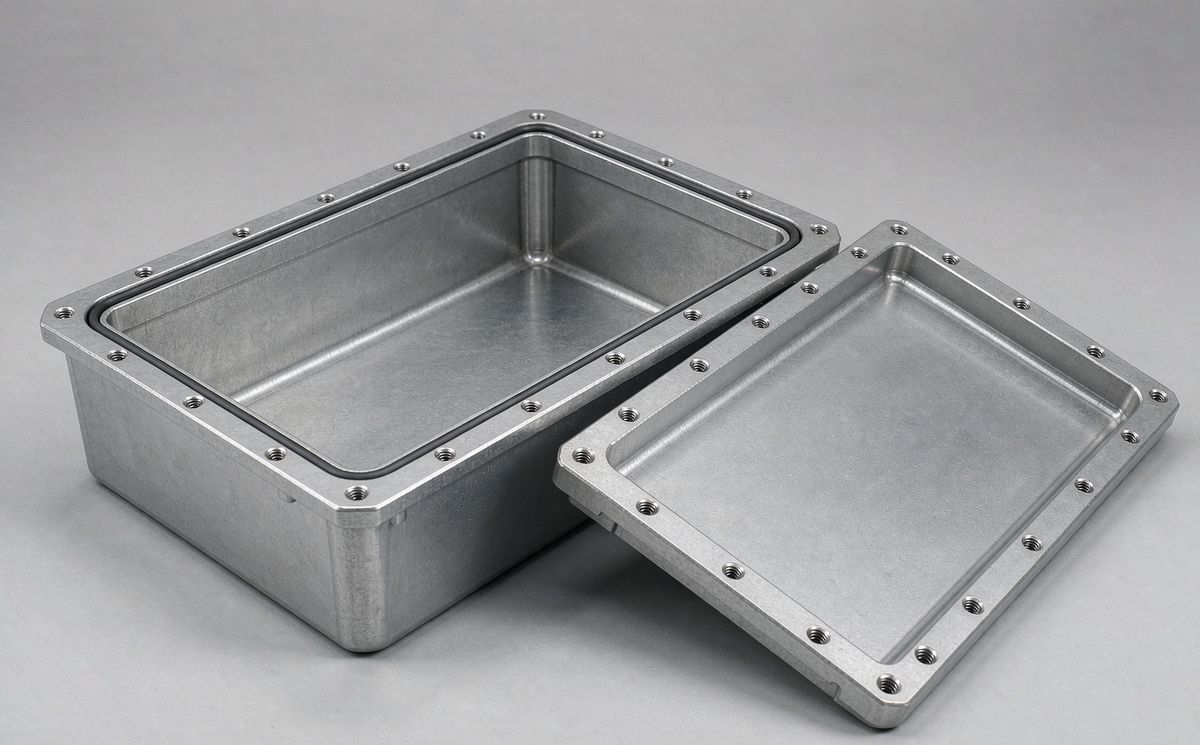
- CNC machining. As-extruded cross-section tolerance is ±0.3–0.5 mm per EN 755-9 — fine for the body, useless for sealing. End-cap faces and O-ring grooves get machined in our own CNC workshop to ±0.05 mm, or the IP67 seal is a sticker.
- Anodizing. Sulfuric-acid anodizing grows a 5–20 µm ceramic layer into the surface. We spec AA10–AA15 for battery boxes: it survives 1,000+ hours of neutral salt spray, never peels the way paint does, and does not add measurable weight.
These two steps are also what let a box pass the AIS 156 vibration and shock sequences, which load the pack through its mounts and sealed joints — a box that is only "extruded to shape" and never finished to tolerance fails there first.
What to check before you order
You do not need to audit a press to buy well. Put these five lines in your RFQ:
- Alloy and temper with standard minimums (EN 755-2 / GB/T 5237), mill test certificate per lot
- Seam weld qualification method for hollow profiles
- Billet heating tolerance (±5°C is a working number, not a luxury)
- Aging cycle for the temper quoted (T5: ~160–180°C × 4–8 h — if a supplier cannot state it, the temper is a guess)
- Machined sealing faces at ±0.05 mm; anodizing AA10–AA15 with salt-spray reports on request
A supplier who runs a real process answers with documents in a day.
The honest counterpoint: when extrusion is the wrong process
We extrude for a living, and extrusion is still the wrong answer sometimes. If your box needs complex 3D geometry — bosses, pockets in three axes, a deeply contoured lid — a die-cast enclosure (A380/A356 class alloys) shapes those features in one shot and may beat a fabricated extrusion-plus-machining route on cost for small, intricate boxes. And for very simple, high-volume lids or trays, stamped sheet wins on unit price every time; that is why many pack designs mix all three: extruded body, stamped lid, cast end caps. The point is not that one process is best. It is that the geometry you draw decides the process, so decide them together.
FAQ
Why is extrusion preferred for battery box bodies?
Because a battery box is long, prismatic, and needs internal ribs — exactly what a die produces continuously. Multi-cavity extrusions deliver 40%+ higher bending stiffness per kilo than flat sheet, and the process holds cross-section tolerances of ±0.3–0.5 mm without secondary forming.
What temperature is aluminum extruded at?
Billets are heated to 450–500°C (±5°C) and exit the die at roughly 500–520°C — solid-state flow, not melting (aluminum melts at 660°C). The melt before casting runs much hotter, 720–750°C.
What is the real difference between T5 and T6 battery box profiles?
The quench and the aging cycle. T5 is air-cooled then aged at 160–180°C; T6 is water-quenched (20–30°C/s) and aged hotter. On 6063, that moves guaranteed strength from 160/120 MPa (T5) to 215/170 MPa (T6) per EN 755-2.
Are the weld seams in hollow profiles a weak point?
A properly made porthole seam retains 80–90% of base-metal strength and passes the same vibration and crush testing as the rest of the profile. A badly made one is a crack initiation line. This is why seam qualification belongs in your supplier checklist, not in the fine print.
Can I get a battery box in 6082-T6 instead of 6063-T6?
Yes, but understand the trade: 6082-T6 gives 310 MPa minimum tensile versus 215 MPa, yet extrudes about 60% as fast as 6063, so it costs 30–50% more per kilo. For road-load boxes, 6063-T6 with a good multi-cavity design is usually the smarter spend.
Can you extrude and machine boxes to our drawings?
Yes — we run the full chain: extrusion (presses up to 5,000 t), our own CNC workshop, and anodizing, as one integrated production network with every stage open to customer audit. Send your section drawing or pack dimensions to info@aymetals.com or WhatsApp +86 133 0570 9557; we reply with a design review and a quote, usually within one working day.
Related: 6063 vs 6061 vs 6082: Which Aluminum Alloy for Battery Boxes · How to Choose an Aluminum Battery Box for E-Rickshaws · Extruded Aluminum Battery Case Profiles (Product)
Photos: [Extrusion billets](https://commons.wikimedia.org/wiki/File:Alba%27s_Products_-_Extrusion_Billets.jpg) by Albasmelter (CC BY-SA 4.0) and [aluminium extrusion die](https://commons.wikimedia.org/wiki/File:Aluminium_extrusion_die_front.png) by Wizard191 (CC BY-SA 3.0), via Wikimedia Commons; [extruded sections](https://commons.wikimedia.org/wiki/File:Extruded_aluminium_section_x3.jpg) by Mike1024, public domain.RELATED NEWS
Need Aluminum Battery Enclosures?
From extrusion to CNC machining and anodizing, AOYIN delivers end-to-end manufacturing for EV battery housings.
Email:
Add:No 339-1 shangye village Gouxi Township Kecheng district Quzhou City, zhejiang province,China
Add:No 339-1 shangye village Gouxi Township Kecheng district Quzhou City, zhejiang province,China
-
-
-
-

WhatsApp