Quzhou Aoyin Metal Materials Co.,Ltd


Aluminum Battery Box Materials: Alloys, Tempers and Finishes
Blog
Aluminum Battery Box Materials: Alloys, Tempers and Finishes
Release time:
2026-09-23
Source


Aluminum Battery Box Materials: Alloys, Tempers and Finishes
Two enclosures can look identical on a drawing and behave nothing alike on the road. One carries a 48 V pack through five monsoon seasons and comes out with surface chalking. The other cracks at a mounting boss in the first year. Wall thickness was the same on both. What differed was the alloy, the temper, and whether the surface finish was ever specified.
Material is the first decision in a battery enclosure, and the one everything else inherits. It sets how much the box weighs, how it joins, whether it survives road salt, and what each unit costs at your volume. Change it after tooling is cut and you are re-designing, not tweaking.
This page is the entry point to our material comparisons. Each section below summarises the decision and links to the detailed article where the numbers are worked through.
The three material families
Before choosing a grade, the family has to be settled. Enclosures in this size class come in aluminium, steel, and engineering plastic, and the right answer depends mostly on volume and shape complexity.
| Material | What it gives you | What it costs you | Practical meaning |
|---|---|---|---|
| Aluminium (extruded) | ~2.70 g/cm³, corrosion-resistant without coating, joins by welding, recyclable | Tooling is cheap but shape is limited to a constant cross-section | Best fit from a few hundred to tens of thousands of units; design changes stay cheap |
| Steel | Highest stiffness per cost, familiar to every shop | ~7.85 g/cm³ — roughly 2.9× aluminium; needs coating to resist corrosion | Wins only where weight is not a constraint and price is the only criterion |
| Plastic (injection) | Complex 3D shapes, integrated clips and bosses, no corrosion | Tooling cost is high; poor heat spreading; brittle in cold | Only pays off at volumes high enough to amortise the mould |
The full comparison, including cost behaviour across volume bands, is in aluminum vs steel vs plastic for EV battery enclosures.
Aluminium alloys: 6063, 6061 and 6082
Within aluminium, three 6xxx grades cover almost every enclosure we see. All are aluminium-magnesium-silicon, all weld, all anodize. They differ in how much manganese and how much magnesium-silicon they carry, and that shows up as strength.
The figures below are standard minimums from EN 755-2:2016 — the guaranteed floor for extruded product, not a typical mill result. Designing to the minimum is what keeps a drawing defensible.
| Alloy and temper | Tensile strength Rm (min) | Yield strength Rp0.2 (min) | Where it is used |
|---|---|---|---|
| 6063-T5 | 160 MPa | 110 MPa | Trim, covers, lightly loaded lids |
| 6063-T6 | 205 MPa | 170 MPa | General-purpose trays and covers |
| 6061-T6 | 260 MPa | 245 MPa | Loaded trays, structural members |
| 6082-T6 | 310 MPa | 260 MPa | Heavily loaded sections, thick-wall frames |
Note the pattern: 6063 gives away strength and gains extrudability. Thin walls and complex hollows come out of 6063 far more easily than 6061. If your section has thin fins or multiple voids, 6063-T6 is usually the practical choice even though 6061-T6 is stronger on paper.
The full trade-off — including what each grade does to weldability and to minimum wall thickness — is in 6063 vs 6061 vs 6082 for battery box alloys.
Temper: what T5 and T6 actually change
Temper is heat treatment, and it is the cheapest strength you will ever buy.
- T5 — cooled from the extrusion press and artificially aged. Lower strength, less distortion, usually cheaper.
- T6 — solution heat treated, quenched, then aged. Higher strength, but quenching thin or complex sections can distort them, which sometimes means a straightening pass afterwards.
The catch that catches people: welding destroys the temper locally. The heat-affected zone next to a weld loses the T6 condition regardless of what the base plate was. That is why a welded tray is weaker than the extrusion it was cut from, and why joint efficiency numbers sit around 80% rather than 100%.
Surface finish
Bare aluminium forms its own oxide layer and survives most service environments. Anodizing is specified when you want more than that — abrasion resistance, a colour, or a harder surface at contact points.
Two types cover the field:
| Type | Film thickness | What it is for |
|---|---|---|
| Type II (conventional) | 5–20 µm | Appearance, mild abrasion resistance, dyeing |
| Type III (hardcoat) | 25–150 µm | Wear surfaces, threaded holes, high-abrasion contact |
Reference specifications are GB/T 8014 and ISO 7599. One practical note: the film grows partly outward and partly inward, so it changes finished dimensions slightly — worth calling out on threaded features before production rather than after.
Where aluminium is the wrong answer
Three situations where we would steer you elsewhere:
Very low volume with a complex shape. Below a few hundred units, a fabricated or moulded alternative often beats an extruded-and-welded box on landed cost, because extrusion tooling and weld fixturing are amortised over too few parts.
Weight is irrelevant and price is everything. If the pack is stationary and the vehicle is not weight-sensitive, steel is cheaper per unit of stiffness. Aluminium's advantage is strength-to-weight, and it is only an advantage when weight is being paid for.
Extremely complex 3D geometry at high volume. Once the annual volume justifies casting tooling and the shape has undercuts, bosses on multiple axes, or integrated cooling channels, a cast aluminium part removes the welds entirely — and with them the leak paths. That is a process decision rather than a material one, but it is the same fork in the road.
Frequently asked questions
What alloy should I default to for an extruded battery tray? 6063-T6 unless the section carries significant load or has thick walls. It is the most extrudable of the three, welds cleanly, and anodizes to a uniform colour. Move to 6061-T6 when a structural member needs the higher yield strength, and to 6082-T6 for thick heavily loaded sections.
Is 6061-T6 always stronger in practice? On a tensile test, yes — 260 MPa minimum against 205 MPa. In a finished tray, not necessarily. If 6061 forces you to a thicker wall because the section will not extrude cleanly, you can end up heavier than a thinner 6063 design that meets the same load.
Does anodizing change dimensions? Yes. Part of the film grows outward, so shafts, threads and close-fit bores shift by a few microns to tens of microns depending on type and thickness. Mask or post-machine the features that matter.
Can 6063 and 6061 be welded in the same tray? They can, and it is common — 6063 for the formed shell, 6061 for a load-bearing beam. Specify the filler and confirm joint efficiency on the actual mixed combination rather than assuming the parent-metal figures.
How should the material be written into an RFQ? Name the alloy and temper, cite the standard (EN 755-2:2016 or GB/T 6892-2018), and state the wall thickness. "6000 series aluminium" is not a specification — it leaves the supplier free to deliver the cheapest grade in the family.
Related products
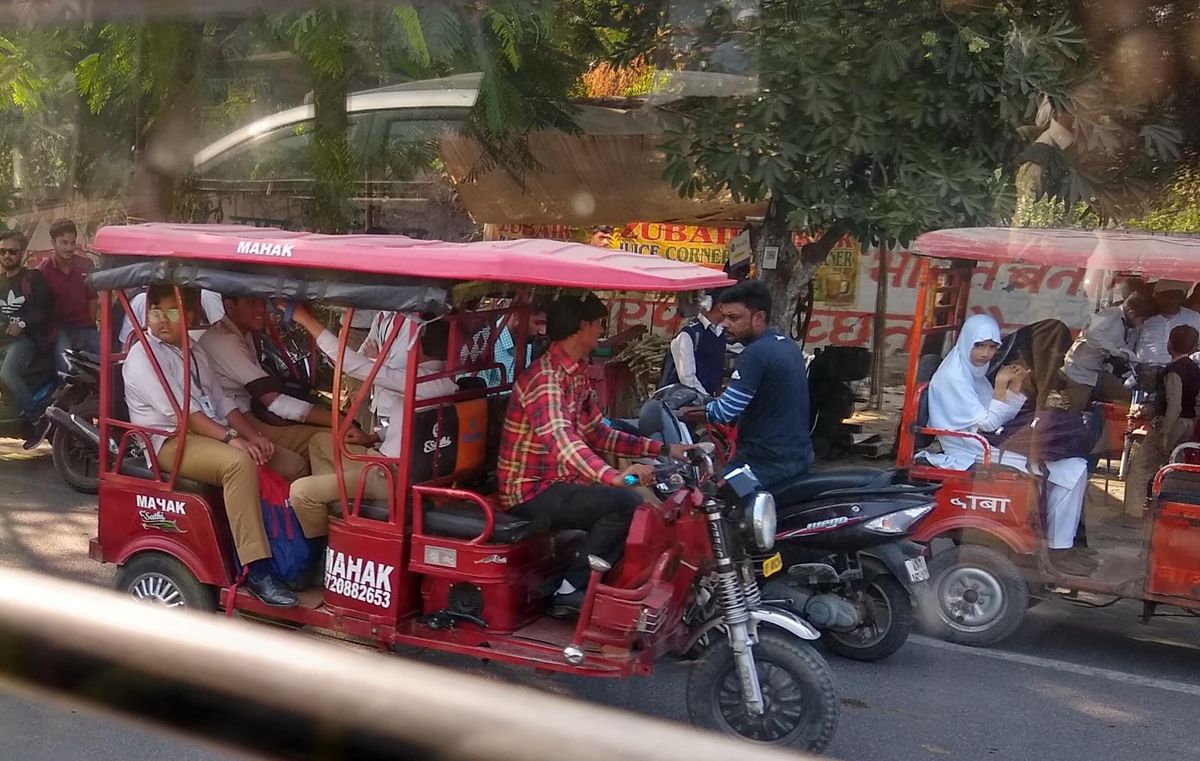
- E-rickshaw battery boxes — three-wheeler enclosures
- E-scooter battery cases — two-wheeler enclosures
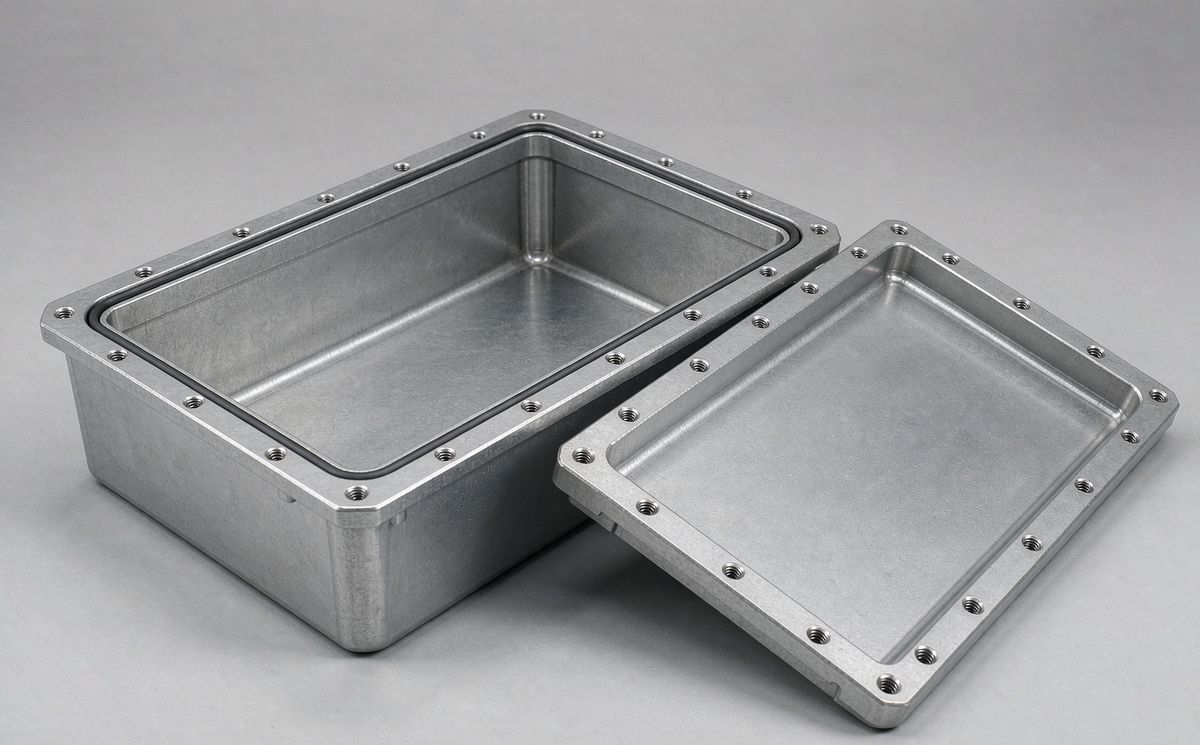
- Aluminium battery trays and covers — pack-level trays
- Extruded profiles and custom sections
Related guides
- How aluminum battery boxes are made — processes and volume thresholds
- Battery box sealing and leak testing — IP ratings and test methods
Specifying a battery enclosure material? Send the load case, the environment and your annual volume, and we will quote against your numbers rather than a generic datasheet. WhatsApp +86 133 0570 9557 or info@aymetals.com. Our operation runs as an integrated production network covering extrusion, CNC, welding and leak testing, and every stage is audit-welcome.
RELATED NEWS
Need Aluminum Battery Enclosures?
From extrusion to CNC machining and anodizing, AOYIN delivers end-to-end manufacturing for EV battery housings.
Email:
Add:No 339-1 shangye village Gouxi Township Kecheng district Quzhou City, zhejiang province,China
Add:No 339-1 shangye village Gouxi Township Kecheng district Quzhou City, zhejiang province,China
-
-
-
-

WhatsApp