Quzhou Aoyin Metal Materials Co.,Ltd


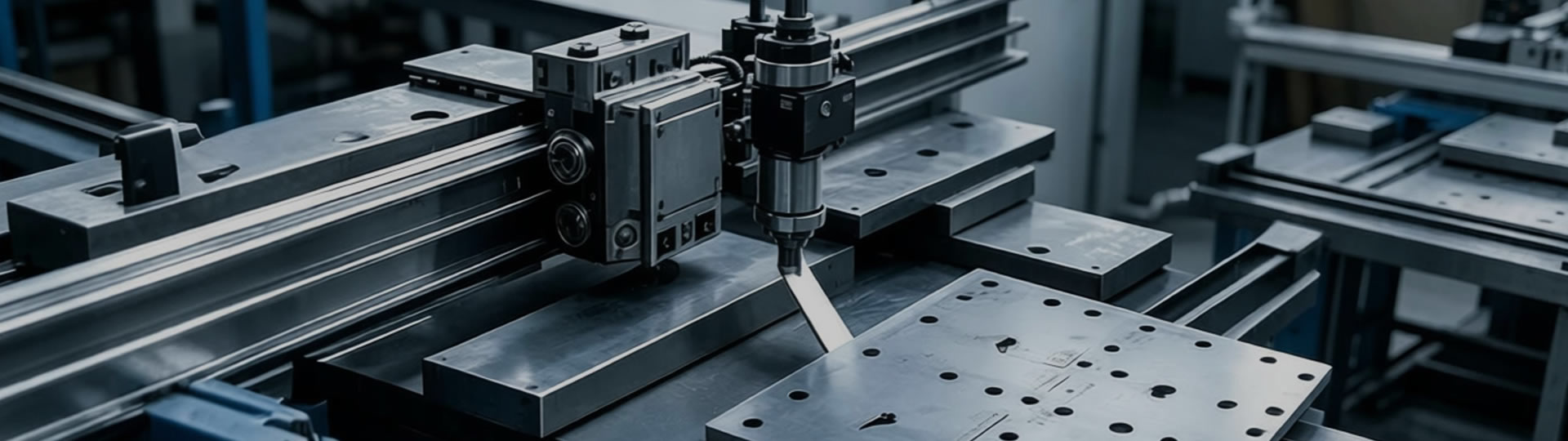
How Aluminum Battery Boxes Are Made: Extrusion, Casting and Welding
Blog
How Aluminum Battery Boxes Are Made: Extrusion, Casting and Welding
Release time:
2026-09-23
Source


How Aluminum Battery Boxes Are Made: Extrusion, Casting and Welding
An aluminium battery enclosure starts as a cast billet about 178 mm in diameter and ends as a sealed box holding a live battery pack. Between those two states sit five to seven operations, and the choices made at step two decide what is possible at step six.
The reason to understand the sequence before you send a drawing anywhere is simple: the process you pick constrains the geometry you can have. An extruded tray can be long and hollow but must keep a constant cross-section. A cast tray can be almost any shape but needs volume to pay for the tool. A stamped tray is cheap per part at scale but shallow. Those are not preferences — they are physical limits of the route.
This page walks the line in order and links to the detailed article on each step.
The sequence
| Step | What happens | What has to be controlled |
|---|---|---|
| 1. Billet and die | Cast billet is cut to length; the die is machined to the section profile | Die correction — the first die is rarely the final one |
| 2. Extrusion | Billet is pushed through the die at 400–500 °C; profile emerges continuously | Exit temperature, ram speed, section straightness |
| 3. Ageing | Profile is aged to T5 or T6 | Time and temperature set the final strength |
| 4. Cutting and machining | Lengths are cut, mounting faces milled, holes drilled | Datum handling — every downstream fit depends on it |
| 5. Welding | Sections are joined into a box | Tool offset, heat input, root fusion |
| 6. Leak testing | Every part is tested, not sampled | Method sensitivity against your acceptance criterion |
| 7. Finishing | Anodizing, coating, hardware fitment | Film thickness, masking of threads and sealing faces |
Not every part sees all seven. A single-piece casting collapses steps 2 through 5 into one operation, which is exactly its appeal.
Route 1: extrude and weld
The dominant route for small and mid-volume enclosures. Profiles are extruded, cut, machined, and welded into a box.
Its advantage is flexibility: extrusion tooling is a small fraction of casting tooling cost, so design changes stay cheap and the economics work from a few hundred units up. Its constraint is that the cross-section must stay constant along the length, and that a welded box has joints — which are also potential leak paths.
The mechanics of the extrusion step itself, including what a die actually does to the metal and why thin walls are hard, are covered in how aluminium extrusion works for battery boxes.
Route 2: die casting
Molten aluminium is injected into a steel die under pressure, producing a near-net-shape part with bosses, ribs and mounting features already in place. Welds are eliminated, and with them the leak paths.
The trade-off is tooling. A large casting tool is a serious capital commitment, amortised only over volume. Below that threshold the per-part cost carries the tooling and loses to the extruded route.
Route 3: stamping
Sheet is formed in a press. Cheap per part at very high volume for shallow shapes, but limited in depth and section complexity, and it needs corrosion protection that extruded aluminium does not.
The full comparison across tooling cost, per-part cost, geometry freedom and leak performance is in extrusion vs die casting vs stamping for battery housings.
The joint: why welding decides whether a tray leaks
For the extruded route, the weld is the operation that most often decides pass or fail at final test.
Most production trays use friction stir welding, which joins below the melting point — around 400–480 °C against a solidus near 582 °C for 6061. Nothing melts, so the usual fusion defects do not appear. What replaces them is a different failure: if the rotating pin drifts off the joint centreline, the root of the weld stays un-bonded while the surface looks perfect. That un-bonded root is a continuous tunnel along the seam, and no visual inspection finds it.
The practical control is holding pin offset within roughly ±0.2 mm, which is why laser tracking appears on serious production cells. The process, the parameter windows published for 6 mm 6061-T6, and the failure analysis behind that ±0.2 mm figure are set out in friction stir welding for aluminium battery trays.
Matching route to volume
This is the decision table most buyers actually need. The thresholds are indicative — design complexity moves them — but the shape of the curve holds.
| Annual volume | Route that usually wins | Why |
|---|---|---|
| Prototypes to a few hundred | CNC from plate, or welded fabrication | No tooling to amortise; changes are free |
| Several hundred to low tens of thousands | Extruded profiles, CNC, welded | Cheap tooling, flexible geometry, acceptable joint count |
| Tens of thousands upward, complex 3D | Die casting | Tooling amortised; welds and leak paths removed |
| Very high volume, shallow shape | Stamping | Lowest per-part cost once the press tooling is paid for |
Where the extruded-and-welded route is the wrong answer
Two honest cases.
Leak-critical geometry at high volume. If the part must be absolutely sealed and your volume justifies casting tooling, a one-piece casting removes the joints entirely. Welded trays are not unreliable, but they have a failure mode that castings structurally do not.
Deep 3D features on multiple axes. If the design needs bosses and channels pointing in three directions, extrusion cannot make it in one piece. You would be welding on many separate features, each becoming a joint to test.
Frequently asked questions
How long does extrusion tooling take? Typically a few weeks from approved section drawing to first article, including die correction. Die correction is normal: the first extrusion off a new die rarely holds tolerance everywhere, and the die is adjusted based on the measured section.
What is the thinnest wall I can specify? It depends on the alloy and the section width, not just the number on the drawing. As a working floor for aluminium extrusion, walls below about 1.2 mm become difficult to hold consistently; wide flat sections need more. Confirm against the actual section rather than a rule of thumb.
Why is my welded tray weaker than the extrusion? Because welding heats the area next to the joint and over-ages it. For heat-treatable 6xxx alloys the heat-affected zone — not the weld metal — is usually the weakest region. Expect joint efficiency around 80% of the parent material.
Can different processes be combined? Constantly. A cast corner node with extruded beams, or an extruded tray with stamped covers. The constraint is joining method and the resulting tolerance stack, not any rule against mixing.
What should I ask for to verify the process was controlled? Test coupons from the same batch, leak test records traceable to each serial, and — for welded parts — the tool offset log. A supplier running the process properly has all three without being asked twice.
Related products
- E-rickshaw battery boxes — three-wheeler enclosures
- E-scooter battery cases — two-wheeler enclosures
- Aluminium battery trays and covers — pack-level trays
- Custom OEM and ODM enclosures
Related guides
- Aluminum battery box materials — alloys, tempers and finishes
- Battery box sealing and leak testing — IP ratings and test methods
Working on an enclosure design? Send the drawing, your annual volume and the leak criterion, and we will tell you which route fits before quoting. WhatsApp +86 133 0570 9557 or info@aymetals.com. Our integrated production network covers extrusion, CNC, welding and leak testing, every stage audit-welcome.
RELATED NEWS
Need Aluminum Battery Enclosures?
From extrusion to CNC machining and anodizing, AOYIN delivers end-to-end manufacturing for EV battery housings.
Email:
Add:No 339-1 shangye village Gouxi Township Kecheng district Quzhou City, zhejiang province,China
Add:No 339-1 shangye village Gouxi Township Kecheng district Quzhou City, zhejiang province,China
-
-
-
-

WhatsApp